嗍
Character Story & Explanation
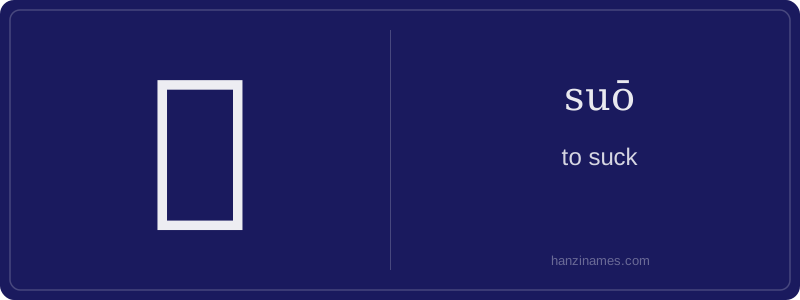
嗍 is predominantly used in spoken and literary Mandarin, especially in southern China and among older generations, to describe deliberate, often leisurely or resourceful suction—e.g., sucking syrup from tamarind pods, extracting marrow from boiled bones, or drawing juice from sugarcane. It appears in regional idioms like 嗑瓜子嗍手指 (kē guāzǐ suō shǒuzhǐ, 'cracking sunflower seeds and sucking fingers'), highlighting tactile enjoyment. Though absent from standard HSK lists, it’s documented in authoritative dictionaries including the Xiàndài Hànyǔ Cídiǎn (7th ed., 2016) as a colloquial verb.
The character is not pictographic—it evolved from phono-semantic compounding. The left 口 indicates oral action; the right 叚 (jiǎ) was historically a phonetic hint, though pronunciation shifted. No oracle-bone or bronze script form exists for 嗍; it first appeared in late imperial vernacular texts. Today, Chinese speakers use it authentically in food contexts: e.g., elders instructing children to 'suck the marrow well' (把骨髓嗍干净) after soup.
The character 嗍 (suō) is a vivid, onomatopoeic verb meaning 'to suck'—specifically with audible, rhythmic, or sustained suction, often involving liquids, marrow, or small objects. Unlike generic verbs like 吸 (xī, 'to inhale' or 'to absorb'), 嗍 emphasizes the physical act: lips sealed, cheeks hollowed, and a soft 'suck-suck' sound. It carries informal, sometimes rustic or colloquial connotations, frequently appearing in southern Chinese dialect-influenced speech and literature.
This character belongs to the 口 (kǒu, 'mouth') radical family, confirming its oral, vocal, or ingestive nature. Its 13 strokes include the mouth radical on the left and a phonetic component 叚 (jiǎ, an archaic variant of 假), which historically aided pronunciation but no longer reflects modern suō—highlighting how phonetic elements can drift over time. It’s rarely used in formal writing but thrives in expressive, sensory-rich contexts.
In cross-cultural comparison, 嗍 aligns closely with English verbs like 'to slurp' or 'to suck noisily', yet differs from clinical terms like 'to aspirate' or poetic 'to sip'. Western equivalents vary: French 'sucer' is neutral and broad; Japanese 'すする' (suru) implies light, quick suction (e.g., noodles); while 嗍 evokes tactile intimacy—like sucking juice from a sugar cane stalk or marrow from a bone—rooted in embodied, agrarian experience rather than abstract or medical framing.
Example Sentences
Common Compounds
Similar Characters — Don't Mix These Up
Your First Step into Chinese Culture: Get a Chinese Name
Every journey into Chinese begins with a name. Use our free Chinese name generator to create a meaningful, personalized Chinese name that fits you perfectly.
Get My Chinese Name →