圄
Character Story & Explanation
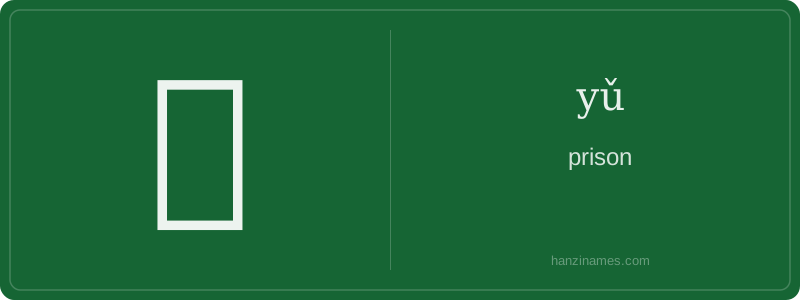
圄 is virtually absent from modern spoken Mandarin and daily media. It survives almost exclusively in classical literature, historical documents, and literary idioms — most notably in the phrase 身陷囹圄 (shēn xiàn líng yǔ), meaning 'to be imprisoned' or 'to fall into captivity'. This phrase appears in official biographies, historical dramas, and formal journalism when describing political or moral downfall. It’s also found in pre-Qin legal texts like the Book of Documents (Shūjīng) and Han dynasty inscriptions referring to detention facilities.
The character’s form dates to seal script (c. 3rd century BCE): 囗 encloses 吾, a phonetic component. It’s not a pictograph of a cage or jail — no archaeological evidence supports such imagery. Instead, it’s a standardized phonosemantic character: 囗 signals 'enclosed space', while 吾 provides pronunciation (yǔ). Today, Chinese learners encounter it mainly in HSK-advanced reading passages or classical Chinese electives.
Hi students! Today we’re learning 圄 (yǔ), a character meaning 'prison' — but not the everyday word you’d use in modern speech. It’s a classical, literary term, often found in historical texts, poetry, or formal writing. Think of it like the English word 'dungeon' — evocative and archaic, not 'jail' or 'prison' in casual conversation. Its structure is simple yet meaningful: the outer frame 囗 (wéi) means 'enclosure' or 'boundary', and the inner part 吾 (wú) hints at sound — this is a phonetic-semantic compound.
Don’t confuse 圄 with more common words like 监狱 (jiānyù) — that’s what Chinese people say today for 'prison'. 圄 appears mostly in fixed phrases or classical allusions. It carries weight and solemnity, often suggesting confinement not just of the body but of fate or virtue — like in ancient legal records or Confucian critiques of unjust rulers. Learning it helps you read classical essays, historical novels, or even calligraphy scrolls.
This character is rarely used alone — it almost always appears in compounds or idioms. That’s why memorizing its components matters: 囗 (enclosure radical) appears in many containment-related characters (e.g., 国 ‘country’, 囚 ‘prisoner’), and 吾 is a common phonetic element (e.g., 语 yǔ ‘language’, 梧 wú ‘parasol tree’). Recognizing these patterns builds your character intuition and speeds up learning!
Example Sentences
Common Compounds
Similar Characters — Don't Mix These Up
Your First Step into Chinese Culture: Get a Chinese Name
Every journey into Chinese begins with a name. Use our free Chinese name generator to create a meaningful, personalized Chinese name that fits you perfectly.
Get My Chinese Name →