坼
Character Story & Explanation
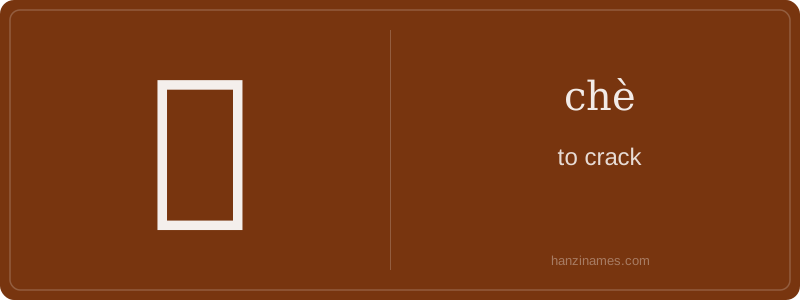
坼 is primarily used in formal, literary, or descriptive contexts—not daily conversation. It appears in classical idioms like 天崩地坼 (‘heaven collapses, earth cracks’) and modern geological reports describing land fissures during droughts or earthquakes. The China Meteorological Administration and official media (e.g., Xinhua) use it in drought bulletins: ‘黄土高原多地出现地表坼裂’ (‘Surface cracking appeared in multiple areas of the Loess Plateau’). It also appears in Tang poetry and historical texts documenting natural disasters.
The character is not a pictograph but a phono-semantic compound: 土 (tǔ, ‘earth’, the semantic radical) indicates meaning related to land/ground, while 斥 (chì, ‘to expel’) provides approximate phonetic guidance—though pronunciation shifted to chè over time. Its form has been stable since seal script (c. 3rd century BCE), with no oracle bone or bronze inscriptions surviving.
Imagine walking across the cracked, sun-baked earth of the Loess Plateau in northwestern China after weeks without rain. The ground isn’t just dry—it’s split open with jagged fissures, some wide enough to swallow a child’s foot. This visceral, physical breaking apart is exactly what 坼 (chè) captures: not a gentle split, but a forceful, often dramatic cracking—of soil, ice, or even metaphorical barriers. It conveys rupture with tension and inevitability.
The character’s eight strokes flow from left (土, ‘earth’) to right (斥, ‘to expel’ or ‘drive out’), visually echoing how pressure from below *forces* the surface apart. Unlike generic verbs for ‘break’, 坼 implies natural, elemental force—not human action. You’ll find it in classical poetry describing winter ice shattering on rivers, or modern news reports about drought-induced land fissures threatening rural infrastructure.
In literary Chinese, 坼 carries poetic weight and gravity. It appears in Du Fu’s famous line ‘天崩地坼’ (tiān bēng dì chè)—‘heaven collapses, earth cracks’—evoking cosmic upheaval. Though rare in casual speech, its presence signals intensity and irrevocability: when the earth 坼, there’s no turning back. Its rarity makes each use deliberate, resonant, and deeply rooted in China’s landscape and literary consciousness.
Example Sentences
Common Compounds
Similar Characters — Don't Mix These Up
Your First Step into Chinese Culture: Get a Chinese Name
Every journey into Chinese begins with a name. Use our free Chinese name generator to create a meaningful, personalized Chinese name that fits you perfectly.
Get My Chinese Name →