垡
Character Story & Explanation
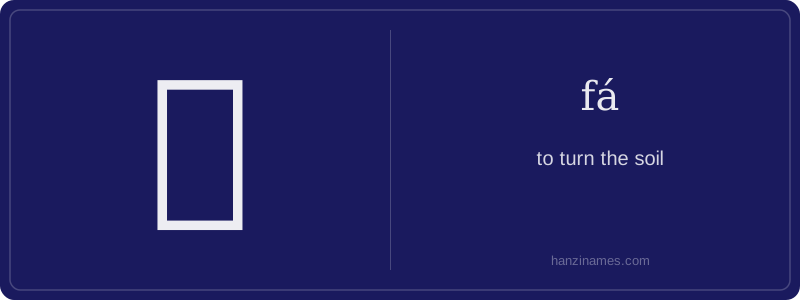
垡 is primarily used in northern Chinese dialects and agricultural contexts, especially in Hebei, Shandong, and Henan provinces. It appears in regional terms like ‘垡地’ (fá dì, ‘to plow/turn the soil’) and in modern agro-technical documents from the Ministry of Agriculture. Though rare in formal Mandarin prose, it survives in rural speech, weather reports referencing ‘soil clod conditions’, and ecological restoration projects documenting soil structure improvement.
The character is a phono-semantic compound: left radical 土 (earth) signals meaning; right component 伐 (fá) provides sound and subtly conveys ‘cutting’ or ‘breaking up’—mirroring the physical action of turning compacted soil. No oracle-bone or bronze script form exists for 垡; it first appeared in Song-era dictionaries as a specialized variant for ‘clod’ or ‘tilled earth’, later extended to the verb ‘to turn soil’.
垡 (fá) is more than a farming term—it embodies the Chinese agrarian worldview where soil is not inert matter but a living, breathing partner in sustenance and harmony. Turning the soil—breaking clods, aerating, preparing for sowing—is an act of reciprocity: humans tend the earth, and the earth nourishes them in return. This reflects the Confucian and Daoist ideal of balance: cultivation as moral labor, land as ancestral trust.
In traditional Chinese cosmology, 土 (earth) is one of the Five Phases (Wǔ Xíng), symbolizing stability, nourishment, and the center—the pivot around which all other elements revolve. 垡’s radical 土 anchors it in this foundational principle, while its right component (伐, fá, meaning 'to attack' or 'to cut down') evokes purposeful, rhythmic intervention—not domination, but measured action to renew fertility.
Unlike Western notions of conquest over nature, 垡 expresses quiet reverence: turning soil is seasonal, cyclical, and humble. It appears in classical agricultural manuals like Wang Zhen’s *Nongshu* (1313 CE), where soil preparation is described as ‘awakening the land’s qi’. Even today, elders in northern China say, ‘No fá, no grain’—a proverb underscoring that human diligence must align with natural rhythms to sustain life.
Example Sentences
Common Compounds
Similar Characters — Don't Mix These Up
Your First Step into Chinese Culture: Get a Chinese Name
Every journey into Chinese begins with a name. Use our free Chinese name generator to create a meaningful, personalized Chinese name that fits you perfectly.
Get My Chinese Name →