埌
Character Story & Explanation
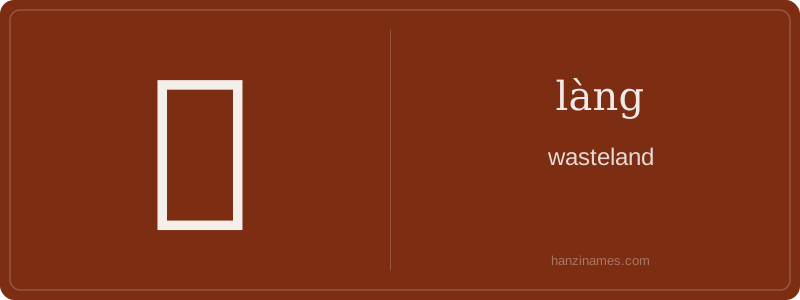
埌 is primarily used today in geographical names and land management terminology across southern China—especially in Guangxi Zhuang Autonomous Region. Official documents from the Guangxi Department of Natural Resources frequently use 埌地 (làngdì) to denote 'low-fertility, non-arable land' in rural land classification reports. It appears in GIS mapping layers and village-level land surveys, but rarely in spoken Mandarin outside local contexts.
The character is not pictographic nor attested in ancient scripts; it emerged later as a phonosemantic compound (土 radical + 郎 shēng). Its origin is practical, not mythic: it was coined to distinguish specific types of unproductive land in southern agrarian administration. Today, farmers and local cadres in Nanning or Baise might say '那块埌太瘦了' ('That stretch of 埌 land is too barren') when assessing soil for reforestation.
The character 埌 (làng) is a relatively rare, regionally grounded term meaning 'wasteland' or 'barren land'—not the poetic emptiness of classical poetry, but the tangible, unproductive earth: cracked clay soil, overgrazed slopes, or abandoned farmland where nothing thrives. It carries a quiet gravity in southern Chinese dialects and local administrative language, especially in Guangxi and Guangdong, where karst terrain creates pockets of infertile land.
Unlike common synonyms like 荒地 (huāngdì) or 荒野 (huāngyě), 埌 emphasizes soil quality—not just absence of cultivation, but inherent infertility. Its tone (fourth tone) mirrors its semantic weight: abrupt, final, like footsteps halting on dry, lifeless ground. This specificity makes it valuable in land surveys, ecological reports, and rural policy documents, where precision matters more than literary flair.
Though absent from the HSK curriculum and most textbooks, 埌 survives in toponyms and official land-use classifications. You’ll find it in village names like 埌尾村 (Làngwěi Cūn) in Guangxi, and in government bulletins discussing 'reclamation of 埌地'—efforts to rehabilitate degraded land. Its endurance reflects how Chinese writing preserves ecological memory: one character encapsulating centuries of human interaction with marginal terrain.
Example Sentences
Common Compounds
Similar Characters — Don't Mix These Up
Your First Step into Chinese Culture: Get a Chinese Name
Every journey into Chinese begins with a name. Use our free Chinese name generator to create a meaningful, personalized Chinese name that fits you perfectly.
Get My Chinese Name →