题
Character Story & Explanation
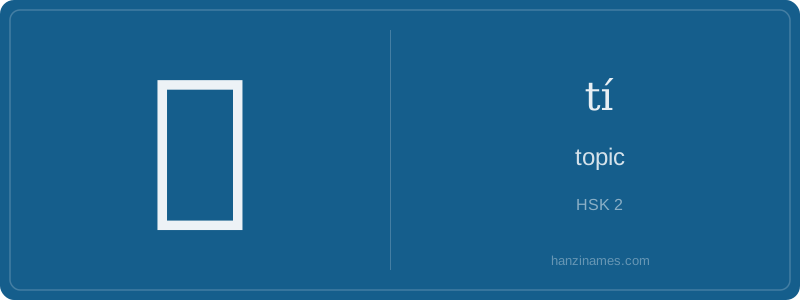
题 is ubiquitous in modern Chinese education and publishing: students solve 数学题 (shùxué tí, 'math problems'), editors finalize 报纸标题 (bàozhǐ biāotí, 'newspaper headlines'), and calligraphers practice 题字 (tízì, 'inscribing characters on scrolls or plaques')—a tradition documented since the Tang dynasty, where eminent poets like Du Fu inscribed verses on friends’ paintings. The idiom 命题作文 (mìngtí zuòwén, 'assigned-topic composition') remains a core HSK writing task.
The character’s form combines 页 (yè, 'page', radical #181) and 是 (shì, 'is/this', phonetic component). Per the Shuōwén Jiězì (121 CE), 题 was defined as 'the front of the head' (引申为额上之文), later extended metaphorically to 'the head/title of a text'. Its structure reflects its function: 页 marks textual surface; 是 grounds it in definitive identification—making 题 literally 'the identifying mark on the page'.
The Chinese character 题 (tí) primarily means 'topic', 'subject', or 'title'—a conceptual anchor for discourse, writing, or examination. Unlike English nouns like 'topic', which are abstract and grammatically neutral, 题 functions dynamically: it appears in verbs (e.g., 题写 tíxiě, 'to inscribe a title'), nouns (考试题 kǎoshì tí, 'exam question'), and even bureaucratic contexts (命题 mìngtí, 'to set an exam question'). Its semantic range reflects how Chinese prioritizes functional role over lexical category.
Radically rooted in 页 (yè, 'page' or 'leaf'), 题 originally referred to the heading or inscription on a scroll’s top margin—a physical marker of intellectual focus. This ties it to literati culture: classical scholars would 'title' paintings or calligraphy with poetic inscriptions (题跋 tìbá), merging authorship, commentary, and authority. Thus, 题 is never merely 'a topic'—it implies intentional framing, scholarly ownership, and contextual weight.
In Western equivalents, 'topic' is often neutral and procedural (e.g., 'choose a topic for your essay'), whereas 题 carries evaluative and institutional gravity—like 'the assigned thesis question' in Oxford tutorials or 'the official debate resolution' in Model UN. It’s closer to the Latin *titulus* (inscribed label) than to generic English 'topic'. This nuance matters: calling something a 题 signals it’s not just any subject—it’s the designated, authoritative focus worthy of structured response.
Example Sentences
Common Compounds
Similar Characters — Don't Mix These Up
Your First Step into Chinese Culture: Get a Chinese Name
Every journey into Chinese begins with a name. Use our free Chinese name generator to create a meaningful, personalized Chinese name that fits you perfectly.
Get My Chinese Name →