健
Character Story & Explanation
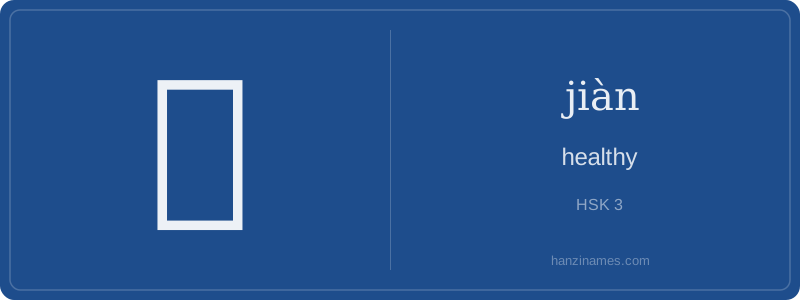
健 is ubiquitous in modern Chinese: from gym signage (健身房 jiànfáng, 'fitness room') to public health campaigns ('健康中国' Jiànkāng Zhōngguó, 'Healthy China' national initiative launched 2016). It appears in the HSK-3 vocabulary list and is essential in compounds like 健康 (jiànkāng, 'health') and 健身 (jiànshēn, 'physical exercise'). A well-documented idiom is 身体健康 (shēntǐ jiànkāng), used in formal greetings and New Year wishes since at least the Ming dynasty.
The character’s structure is phonosemantic: 亻 (person radical, semantic) + 建 (jiàn, phonetic and semantic contributor meaning 'to build, establish'). 建 itself evolved from oracle-bone script depicting a hand holding a banner over a wall—symbolizing establishment. Thus, 健 literally implies 'a person who builds/strengthens themselves', reflecting Confucian and Daoist ideals of self-cultivation.
As an archaeologist brushing dust from a Han dynasty bamboo slip, I find 健 inscribed in clerical script—not as a static glyph, but as a living pulse of ancient wellness philosophy. Its left radical 亻 (person) anchors it in human experience, while the right component 建 (jiàn, 'to build') reveals its original conceptual core: health as *constructed*, not inherited—a deliberate practice of cultivation, like building a sturdy house or forging resilient bronze.
This character emerged during the Warring States period as medical and Daoist thought emphasized bodily integrity and vital energy (qì). Unlike passive notions of 'not sick', 健 conveys active robustness—muscle tone, mental clarity, moral vigor. Excavated Mawangdui medical texts (c. 168 BCE) use 健 to describe 'strong sinews' and 'unfaltering spirit', linking physical resilience to ethical discipline—a holistic ideal centuries before Hippocrates’ humoral theory.
By the Tang dynasty, 健 had crystallized into a lexical cornerstone of Chinese self-cultivation. Stele inscriptions praise officials with '健笔' (vigorous brushwork), implying intellectual stamina; martial manuals demand '健骨' (strong bones) for stable stances. Its ten-stroke form—precise, balanced, ascending—mirrors its semantic weight: health as disciplined architecture of body and will, etched not just on bone or silk, but into China’s civilizational grammar.
Example Sentences
Common Compounds
Similar Characters — Don't Mix These Up
Your First Step into Chinese Culture: Get a Chinese Name
Every journey into Chinese begins with a name. Use our free Chinese name generator to create a meaningful, personalized Chinese name that fits you perfectly.
Get My Chinese Name →