姨
Character Story & Explanation
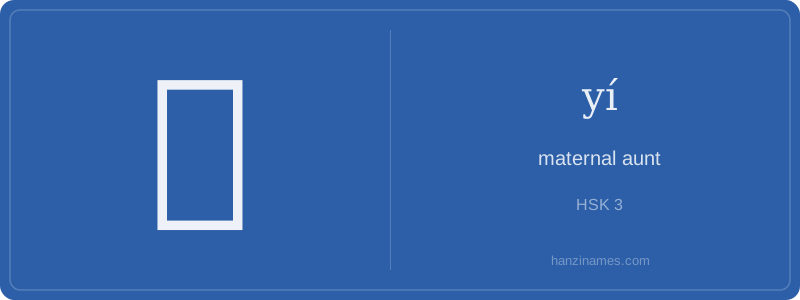
姨 is widely used across modern Mandarin-speaking communities — from family chats to official forms. In China’s household registration system (hùkǒu), relatives like 姨 may be listed as ‘close kin’ for residency or inheritance matters. The term appears in classic texts like the 18th-century novel *Dream of the Red Chamber*, where maternal aunts hold distinct social influence. Common phrases include ‘姨父’ (yí fù, ‘aunt’s husband’) and ‘小姨’ (xiǎo yí, ‘younger maternal aunt’), reflecting age-based respect norms.
The character’s form evolved from seal script: the left side 女 is a clear pictograph of a kneeling woman (standard radical for female-related terms); the right side 夷 originally depicted a person with a bow and arrow in ancient scripts, later simplified and repurposed phonetically. No oracle-bone evidence exists for 姨 itself — it first appeared in standardized clerical script during the Han dynasty (206 BCE–220 CE) as a phonosemantic compound.
Hi students! Today we’re learning 姨 (yí), a Level 3 HSK character meaning 'mother’s sister' — what English speakers call 'aunt' (specifically on your mother’s side). It’s written with just 9 strokes and belongs to the 女 (nǚ, 'woman') radical, which tells us it’s related to female family roles. Notice how the right side — 夷 (yí) — is both the phonetic component (giving the sound) and a historical marker of identity and kinship in Chinese naming conventions.
This character reflects China’s precise kinship terminology — unlike English ‘aunt’, which covers both maternal and paternal sides, Chinese distinguishes 姨 (mother’s sister), 姑 (gū, father’s sister), 婶 (shěn, father’s brother’s wife), and 嫂 (sǎo, elder brother’s wife). Learning 姨 helps you understand not just vocabulary, but how Chinese culture values relational clarity in families.
Remember: 姨 is always used respectfully — never for strangers or peers. You’ll hear it in daily conversation (e.g., ‘我姨来了’ — ‘My aunt is coming’) and see it in formal documents like household registration (hùkǒu). It’s also part of common compound words like 表姨 (biǎo yí, ‘maternal cousin’s mother’) and 姨妈 (yí mā, an affectionate term for maternal aunt). Practice writing it slowly, stroke by stroke, and say ‘yí’ clearly — like ‘ee’ in ‘see’, with a level first tone.
Example Sentences
Common Compounds
Similar Characters — Don't Mix These Up
Your First Step into Chinese Culture: Get a Chinese Name
Every journey into Chinese begins with a name. Use our free Chinese name generator to create a meaningful, personalized Chinese name that fits you perfectly.
Get My Chinese Name →