愿
Character Story & Explanation
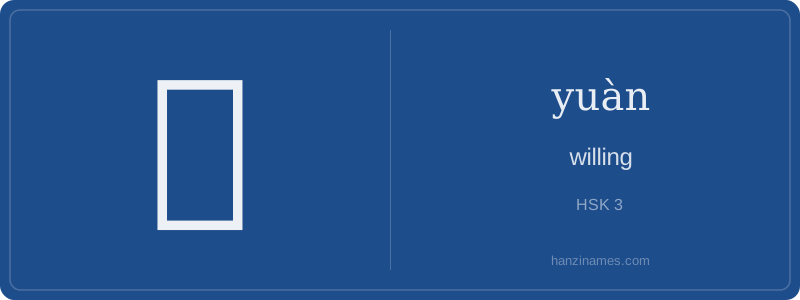
愿 is ubiquitous in modern Chinese life: from wedding vows (我愿意, wǒ yuànyì, 'I am willing') to New Year blessings (万事如意, wànshì rúyì, 'may all things go as wished') and formal petitions ('恳请批准,愿效犬马之劳', 'I respectfully request approval and pledge loyal service'). It appears in the idiom 心甘情愿 (xīn gān qíng yuàn, 'willing from heart and feeling'), emphasizing wholehearted, uncoerced commitment—a phrase documented since the Ming dynasty in vernacular novels like Water Margin.
The character evolved from oracle-bone script forms depicting a mouth (口) above a heart (心), later standardized during the Qin dynasty’s small seal script. Though its earliest forms aren’t pictographic sun/moon/tree, the consistent inclusion of 心 underscores its core semantic field: volition anchored in conscience—not external force or fleeting emotion.
The Chinese character 愿 (yuàn) carries nuanced meaning beyond simple 'wish'—it conveys sincerity, moral earnestness, and prudent intention. Historically rooted in Confucian ideals, it implies a wish grounded in virtue and responsibility—not mere desire. Its heart radical (心) signals that this is an inner, emotionally and ethically committed aspiration, not superficial longing. In classical texts like the Analects, 愿 appears in contexts emphasizing humility and self-restraint, aligning with the HSK-3 emphasis on socially aware vocabulary.
Unlike English ‘wish’, which can be casual or whimsical (e.g., ‘I wish I had ice cream’), 愿 demands gravitas: one 愿意 (yuànyì, ‘is willing’) only after thoughtful alignment with duty or principle. This mirrors Western concepts like Kantian ‘good will’—acting from moral law rather than inclination—or the Stoic ideal of wishing *only for what is within one’s control*. It’s less about outcome and more about the integrity of the volition itself.
In contemporary usage, 愿 bridges reverence and resolve: used in solemn vows (e.g., wedding oaths), patriotic pledges (‘愿为祖国奉献’), and Buddhist chants (‘众生皆愿离苦’). Its cultural weight parallels Latin ‘voluntas’ (will as rational choice) rather than ‘desiderium’ (desire). Even in digital communication, typing ‘愿’ in WeChat or Douyin carries quiet solemnity—never used flippantly. This reflects China’s enduring value on intentionality over impulse, making 愿 a linguistic anchor for ethical agency.
Example Sentences
Common Compounds
Similar Characters — Don't Mix These Up
Your First Step into Chinese Culture: Get a Chinese Name
Every journey into Chinese begins with a name. Use our free Chinese name generator to create a meaningful, personalized Chinese name that fits you perfectly.
Get My Chinese Name →