扫
Character Story & Explanation
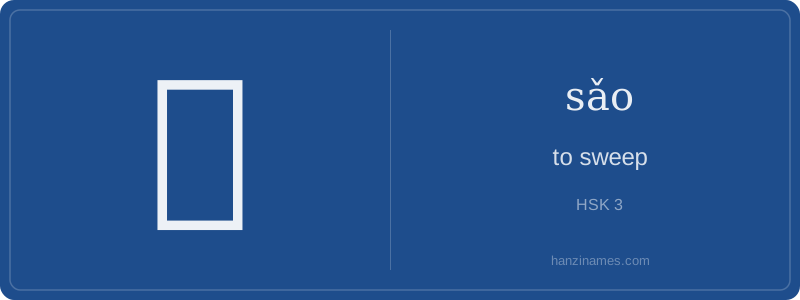
扫 is ubiquitous in daily life: from schoolchildren assigned ‘sweeping duty’ (扫地值日, sǎo dì zhí rì) to urban sanitation workers using high-pressure street sweepers (道路清扫车, dào lù qīng sǎo chē). It appears in the widely taught idiom 扫除障碍 (sǎo chú zhàng ài, 'to remove obstacles'), used in business and education contexts since at least the 1950s. Historically, the character appears in Tang dynasty poetry describing monks sweeping temple courtyards—a disciplined act linking labor, meditation, and humility.
扫 evolved from seal script (c. 3rd century BCE), where the left radical 扌 (hand) combined with a simplified form of 彐 (originally representing a broom-like tool). Unlike oracle-bone characters, no pictographic sun/moon/tree origin exists; instead, it’s a clear semantic-phonetic compound: 扌 signals hand-action, and 彐 (now written as 乂+彐 in modern form) served both sound and shape cues. Today, you’ll see it on municipal signs across China: ‘请勿乱扔垃圾,共同清扫街道’ (Please don’t litter—let’s sweep streets together).
The character 扫 (sǎo) embodies the Chinese cultural reverence for order, cleanliness, and proactive care—values deeply rooted in Confucian ideals of self-cultivation and social harmony. Sweeping is never merely physical labor; it’s a ritual of renewal—clearing dust before festivals, preparing homes for guests, or symbolically ‘sweeping away’ misfortune during Spring Festival preparations. This reflects a worldview where inner and outer cleanliness are inseparable: a tidy space mirrors a disciplined mind and respectful heart.
In classical texts and folk practice alike, 扫 appears in metaphors of moral vigilance—‘sweeping away’ greed, ignorance, or corruption. The act implies intentionality and continuity: one does not sweep once, but regularly, mirroring the Daoist and Buddhist emphasis on mindful repetition as path to virtue. Even today, elders admonish children: ‘扫地如扫心’ (sweeping the floor is like sweeping the heart)—a living proverb that frames mundane action as ethical practice.
Unlike Western notions of cleaning as corrective or reactive, 扫 carries forward-looking energy—it prepares ground for what’s coming: new year, new beginnings, new people. Its dual pronunciation (sǎo/sào) subtly echoes this duality: sǎo is the standard verb (to sweep), while sào appears in fixed terms like 扫帚 (sào zhou, broom), anchoring the action in its tool. This linguistic layering reveals how language preserves worldview—where even phonetics encode function, materiality, and purpose.
Example Sentences
Common Compounds
Similar Characters — Don't Mix These Up
Your First Step into Chinese Culture: Get a Chinese Name
Every journey into Chinese begins with a name. Use our free Chinese name generator to create a meaningful, personalized Chinese name that fits you perfectly.
Get My Chinese Name →