聪
Character Story & Explanation
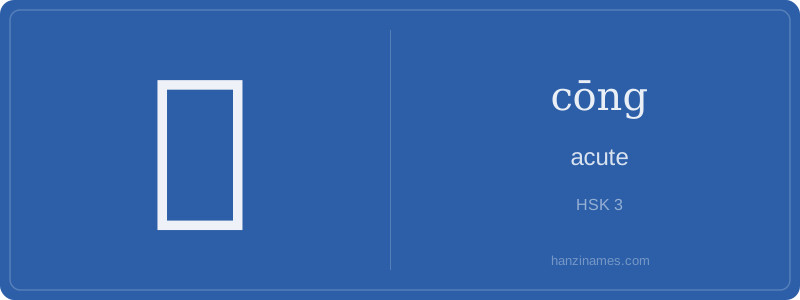
聪 is overwhelmingly used in the compound 聪明 (cōngmíng), meaning 'clever' or 'quick-witted', and ranks among the top 50 most frequent adjectives in HSK 3+ textbooks and graded readers. It appears in idioms like 耳聪目明 (ěr cōng mù míng, 'sharp-eared and bright-eyed'), documented since the Tang dynasty *Taiping Guangji* (978 CE) to describe alert, perceptive elders. The character also features in formal contexts: '聪慧' (cōnghuì) is common in school report cards for 'intellectually agile', and '聪颖' (cōngyǐng) appears in classical biographies praising young scholars’ precocity.
The character is a phono-semantic compound: 耳 (ear, semantic) + 总 (zǒng, phonetic, now pronounced cōng). No pictographic origin exists—it emerged in seal script as a deliberate construction, not a naturalistic drawing. Today, Chinese parents commonly write 聪 in baby names (e.g., 李聪, Lǐ Cōng) to wish for perceptiveness, reflecting its enduring cultural weight as a virtue—not just ability.
As a linguistic detective, I begin at the scene: the character 聪 appears in standardized seal script (c. 3rd century BCE) and matured in clerical script during the Han dynasty—no oracle bone or bronze inscriptions bear this form, confirming it’s a later semantic-phonetic compound. Its left side, 耳 (ěr), is the ‘ear’ radical—a clear semantic anchor: acute hearing was foundational to ancient Chinese conceptions of intelligence. This isn’t metaphorical guesswork; classical texts like the *Book of Rites* explicitly link ‘listening well’ (聪) with moral discernment and sage-like perception.
The right component, 总 (zǒng), serves as the phonetic clue—though modern pronunciation diverged (cōng vs. zǒng), historical Middle Chinese reconstructions show closer phonetic alignment (*tsuŋ → *tshuŋ). Crucially, 总 itself evolved from 總, meaning ‘to gather’ or ‘summarize’, subtly reinforcing the idea of integrating sensory input into coherent understanding. This dual architecture—ear + synthesis—makes 聪 far more precise than generic ‘smart’: it denotes *attentive, perceptive acuity*, especially auditory and cognitive.
Modern usage preserves this nuance: while often translated as ‘intelligent’, native speakers distinguish 聪明 (cōngmíng) — which emphasizes quick perception and adaptability — from 智慧 (zhìhuì), denoting deeper wisdom or philosophical insight. Even in education policy, the Ministry of Education’s 2022 curriculum guidelines highlight ‘cultivating 聪明 children’ not as rote learners but as observant, responsive thinkers—echoing millennia-old Confucian pedagogy that prized listening (听) before speaking (言).
Example Sentences
Common Compounds
Similar Characters — Don't Mix These Up
Your First Step into Chinese Culture: Get a Chinese Name
Every journey into Chinese begins with a name. Use our free Chinese name generator to create a meaningful, personalized Chinese name that fits you perfectly.
Get My Chinese Name →