停
Character Story & Explanation
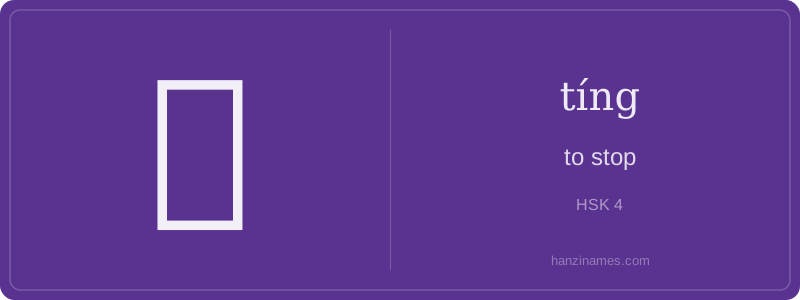
停 is ubiquitous in modern Chinese life: traffic signs say ‘停车’ (parking), metro announcements use ‘列车即将停靠’ (train will soon stop), and digital interfaces display ‘暂停’ (pause) on video players and downloads. A well-documented idiom is ‘停滞不前’ (tínɡ zhì bù qián), meaning ‘stagnation without progress’—used since at least the late Qing period in reformist writings to critique institutional inertia.
The character first appeared in seal script (c. 3rd century BCE), combining 亻 (person) and 亭 (tíng, a pavilion—originally a roadside rest stop). Historical inscriptions confirm its early use for ‘to halt temporarily at a station or post’. No oracle bone form survives, but bronze inscriptions from the Warring States period show 停 used in military dispatches to denote ‘halt troop movement’—a verifiable administrative function.
The character 停 (tíng) embodies a deeply relational concept of cessation—not merely physical halting, but a conscious, contextual pause that honors balance and intention. In Chinese worldview, stopping is never passive or negative; it’s an act of wisdom, like the stillness before a bow is drawn or silence between musical phrases in guqin performance. This reflects Daoist and Confucian values: knowing when to halt preserves harmony, prevents excess, and makes space for reflection.
Unlike English ‘stop’, which often implies interruption or finality, 停 suggests a temporary, purposeful suspension—like a bus at a station (停靠), a heart during meditation (心跳暂停), or a judge pausing proceedings (休庭). The radical 亻 (person) anchors the action in human agency: stopping is a choice made by a mindful subject, not an external force. This person-centered nuance reveals how Chinese language encodes ethics into grammar.
This character also mirrors China’s historical rhythms: dynasties rose and fell, yet civil service exams paused during mourning periods (丁忧停考), and imperial edicts could suspend taxes (停征) to ease hardship. Even today, ‘temporary suspension’ (暂停) appears in regulations, tech interfaces, and public announcements—always implying reversibility and responsibility. To stop, in this tradition, is to hold time gently, not to abandon motion.
Example Sentences
Common Compounds
Similar Characters — Don't Mix These Up
Your First Step into Chinese Culture: Get a Chinese Name
Every journey into Chinese begins with a name. Use our free Chinese name generator to create a meaningful, personalized Chinese name that fits you perfectly.
Get My Chinese Name →