励
Character Story & Explanation
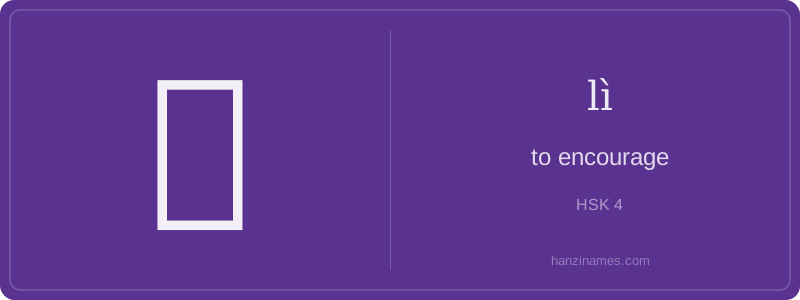
In contemporary China, 励 appears ubiquitously in education, workplace culture, and public campaigns: school mottos ('励志成才', 'inspire ambition and cultivate talent'), corporate training modules, and national slogans like '励精图治' (a classical idiom revived in modern governance contexts). It’s also embedded in standardized tests — HSK Level 4 learners encounter it in reading passages about youth development and policy documents.
The character is not pictographic; its origin is firmly phono-semantic. 力 (force) is the semantic component, and 厉 (originally 'sharp/strict', pronounced lì) supplies both sound and conceptual gravity. No oracle bone or bronze inscriptions contain 励 — it emerged later in seal script as a deliberate compound, reflecting the Warring States period’s emphasis on moral cultivation and disciplined effort.
Our detective work begins with the radical 力 (lì) — 'strength' or 'power' — standing boldly on the right, anchoring the character’s core idea: encouragement as an active, forceful act. This isn’t passive approval; it’s energizing another person’s effort, like a coach pushing an athlete past fatigue. The left side, 厉 (lì), originally meant 'strict' or 'severe', but here it functions phonetically while subtly reinforcing intensity — encouragement that carries weight and conviction.
Tracing through seal script (c. 3rd century BCE), 励 appears as a phono-semantic compound: 力 signals meaning (effort-driven action), and 厉 provides sound and connotation. By the Han dynasty, it was standard in texts like the *Shuowen Jiezi* (100 CE) as 'to spur on' — not just cheerleading, but moral and practical incitement toward diligence. Its seven-stroke form stabilized early, reflecting efficiency: every stroke serves purpose, no ornamentation.
Modern usage preserves this vigorous intent. In official discourse, 励 appears in slogans like '励精图治' (lì jīng tú zhì) — 'exert oneself to govern well' — echoing imperial-era statecraft manuals. Even today, its tone is aspirational yet demanding: you don’t '励' someone to relax; you 励 them to study harder, innovate, or persevere. That sharp, focused energy — rooted in 力 — remains unmistakable across 2,000 years of textual evidence.
Example Sentences
Common Compounds
Similar Characters — Don't Mix These Up
Your First Step into Chinese Culture: Get a Chinese Name
Every journey into Chinese begins with a name. Use our free Chinese name generator to create a meaningful, personalized Chinese name that fits you perfectly.
Get My Chinese Name →