占
Character Story & Explanation
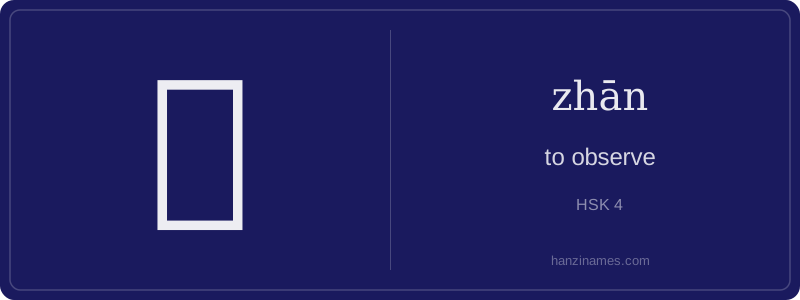
In daily life, 占 appears ubiquitously: 占用 (zhànyòng, 'to occupy') labels metro signs warning against blocking doors; 占线 (zhànxiàn, 'line busy') flashes on phones; and 占便宜 (zhàn piányi, 'to take unfair advantage') is a common moral critique. Historically, 占 was central to *shì* (divination) in Zhou dynasty texts like the *Yijing*, where 占卜 (zhānbǔ) meant interpreting hexagrams—a state-sanctioned practice requiring rigorous training and ethical restraint.
The earliest attested form of 占 appears in bronze inscriptions (c. 1000 BCE) as a compound: ⺊ (a simplified roof or shelter radical, later standardized as the ‘divination’ radical) over 口 (mouth), symbolizing ritual speech during oracle interpretation—not a pictograph of an object, but a logograph representing authoritative utterance grounded in observation.
The character 占 (zhān) opens a window into the ancient Chinese worldview where observation was inseparable from wisdom and responsibility. In classical thought, observing omens—clouds, stars, cracks in oracle bones—was not superstition but a disciplined practice of reading patterns in nature and human affairs. This 'observation' implied deep attention, reverence for cosmic order, and ethical accountability: to observe well was to align one’s actions with the Dao.
Over time, 占 evolved beyond divination to signify authoritative assessment—measuring significance, claiming space, or asserting influence. Its dual pronunciations reflect this semantic expansion: zhān retains the classical sense of ‘observing portents’ (e.g., 占卜), while zhàn denotes active appropriation—‘to occupy’, ‘to account for’—mirroring how attentive observation often precedes decisive action in Confucian and strategic thinking.
This duality reveals a core cultural logic: knowledge is never passive. To ‘observe’ (zhān) is to prepare for engagement; to ‘occupy’ (zhàn) is to act with informed intention. The character thus embodies the Confucian ideal of ‘knowing before doing’ and Sun Tzu’s maxim that victory lies in knowing oneself and the enemy. 占 is a quiet reminder that in Chinese thought, perception shapes power—and responsibility begins with attention.
Example Sentences
Common Compounds
Similar Characters — Don't Mix These Up
Your First Step into Chinese Culture: Get a Chinese Name
Every journey into Chinese begins with a name. Use our free Chinese name generator to create a meaningful, personalized Chinese name that fits you perfectly.
Get My Chinese Name →