彩
Character Story & Explanation
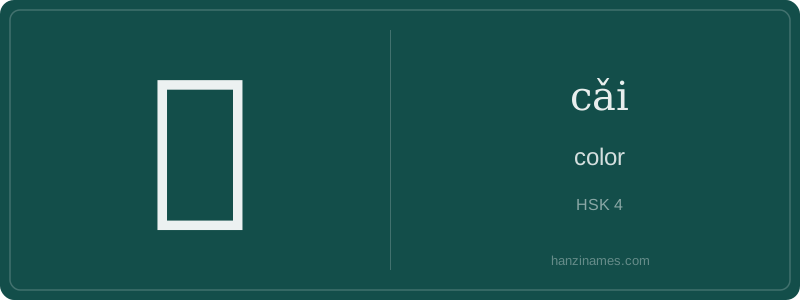
彩 is ubiquitous in modern Chinese life: it appears in daily phrases like 彩票 (cǎi piào, 'lottery ticket'), a nationally regulated financial instrument with over 2 trillion RMB in annual sales (China Welfare Lottery data, 2023); in media terms like 彩色 (cǎi sè, 'color', as in 彩色电视 'color TV'); and in idioms like 丰富多彩 (fēng fù duō cǎi, 'rich and colorful', used officially in education policy documents to describe cultural diversity). The character also features prominently in national branding — e.g., China Central Television’s logo includes 彩 in its 'CCTV-4 中文国际' channel branding for overseas audiences.
The character 彩 first appears in standardized form in the Han dynasty Shuōwén Jiězì (c. 100 CE) as a phono-semantic compound: 彡 (radical, indicating ornamentation) + 采 (phonetic and semantic base, meaning 'to gather/select'). No oracle bone or bronze inscriptions contain 彩 — it emerged later as literacy expanded and vocabulary specialized around visual culture.
Our detective begins at the crime scene: the character 彩, found in modern texts with the radical 彡 (shān) — three delicate strokes resembling ornamental hair or decorative lines. This radical doesn’t mean ‘color’ itself but signals adornment, brilliance, and visual flourish — a clue that 彩 isn’t just about pigment, but about *luminous distinction*. Early seal script forms already show 彡 paired with a phonetic component (采 cǎi), hinting at sound-based borrowing long before standardization.
Zooming in on the phonetic core: 采 (cǎi) originally depicted hands plucking berries from a tree — conveying ‘to gather’, then extended to ‘to select’ and ‘to perceive’. When fused with 彡, it transformed into 彩: not merely ‘color’, but *the act of perceiving or bestowing vivid, meaningful hue* — like selecting auspicious shades for ritual banners or imperial robes. This semantic layer explains why 彩 appears in words like ‘luck’ (好运彩) and ‘prize’ (彩票), where color symbolizes fortune’s vivid manifestation.
The character’s evolution reflects China’s aesthetic philosophy: color is never neutral — it carries moral weight, cosmological resonance, and social significance. In Tang dynasty poetry, 彩 evokes painted silks and rainbow bridges; in Ming-Qing opera, 彩衣 (colored robes) signal rank and virtue. Even today, 彩 retains this charged elegance — it’s the shimmer in a sunset, the gloss on a wedding dress, the dazzle of digital screens. It’s color *as value*, not just spectrum.
Example Sentences
Common Compounds
Similar Characters — Don't Mix These Up
Your First Step into Chinese Culture: Get a Chinese Name
Every journey into Chinese begins with a name. Use our free Chinese name generator to create a meaningful, personalized Chinese name that fits you perfectly.
Get My Chinese Name →