扔
Character Story & Explanation
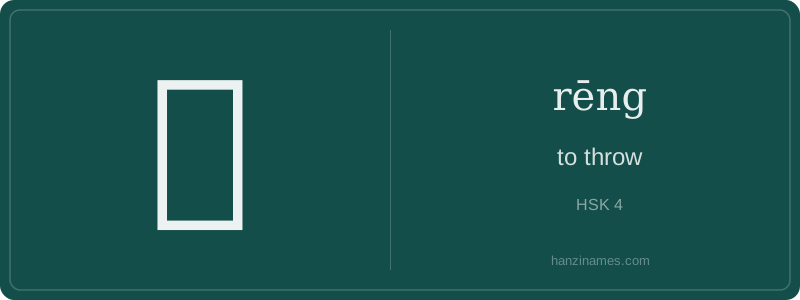
In daily life, 扔 is ubiquitous: food delivery riders rēng packages at apartment gates; students rēng erasers during class breaks; parents tell kids not to rēng trash on the street. It appears in common phrases like ‘扔掉’ (rēng diào, to discard) and ‘乱扔垃圾’ (luàn rēng lājī, littering)—a punishable offense under China’s 2020 Urban Management Regulations. The term is also central to public campaigns against waste, reinforcing civic responsibility.
The character evolved from seal script, where 扌 (hand) combined with 乃 (an ancient phonetic component, not a pictograph of ‘baby’ here). Modern research (e.g., *Zhongguo Wenzi Xue* 2018) confirms 乃 served primarily as a sound hint for rēng in Old Chinese, not a semantic element. So rather than imagining a baby being thrown, think of the real-life scene: a Shanghai office worker tossing a coffee cup into a bin without breaking stride—effortless, functional, unmistakably 扔.
Imagine a bustling Beijing hutong on a crisp autumn morning. A street vendor quickly rēng (扔) a crumpled plastic bag into a blue recycling bin—his wrist flicking outward with practiced ease. This simple, decisive motion captures the essence of 扔: not a gentle placement, but an intentional, often forceful release of an object away from the body. The character’s hand radical (扌) anchors it in physical action, while the right side (乃) hints at directionality and immediacy—like something launched forward.
Unlike 投 (tōu, to pitch or toss with aim) or 掷 (zhì, to hurl formally or in sports), 扔 carries casual, everyday energy—sometimes even impatience or dismissal. You’d rēng a used tissue, a broken pen, or an unwanted invitation—not a ceremonial jade disc. Its tone (first tone, high and level) mirrors its directness: no rise, no fall, just clean execution.
In spoken Mandarin, 扔 often implies finality or irreversibility—‘to discard’ as much as ‘to throw’. When someone says ‘我把旧手机扔了’ (I threw away my old phone), they mean it’s gone for good. This pragmatic finality reflects modern urban life in China, where efficiency and decluttering are increasingly valued. Even in digital slang, 扔 is repurposed: ‘把烦恼扔掉’ (throw away your worries) shows how the verb extends metaphorically—still rooted in that visceral, bodily gesture of letting go.
Example Sentences
Common Compounds
Similar Characters — Don't Mix These Up
Your First Step into Chinese Culture: Get a Chinese Name
Every journey into Chinese begins with a name. Use our free Chinese name generator to create a meaningful, personalized Chinese name that fits you perfectly.
Get My Chinese Name →