扮
Character Story & Explanation
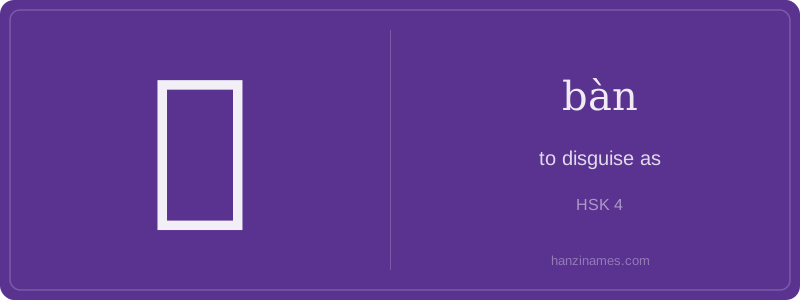
In modern Chinese daily life, 扮 appears frequently in contexts of performance, education, and digital identity. It’s central to phrases like 扮演 (bànyǎn, 'to play/act a role')—used in theater, corporate training simulations, and even online avatars. The HSK 4 textbook *Bridging China* (2021 ed.) features 扮 in dialogues about school drama clubs and job interview role-plays. A documented idiom is 扮猪吃老虎 (bàn zhū chī lǎohǔ, 'disguise as a pig to eat the tiger'), meaning to feign weakness to gain advantage—a trope found in Ming dynasty novels like *Journey to the West*.
The character’s form is not pictographic but phono-semantic: 扌 (hand radical) + 分 (fēn, phonetic component, suggesting pronunciation). While 分 originally meant 'to divide', here it serves mainly as a sound cue. No oracle-bone or bronze script forms survive for 扮—it first appeared reliably in Song dynasty texts, reflecting the rise of vernacular theater and professional acting troupes.
Imagine a bustling Beijing hutong on Mid-Autumn Festival eve: children giggle as they bàn (扮) as mythic figures—Chang’e with silk scarves, the Jade Rabbit with cotton-ball ears—while elders watch, smiling. The character 扮 captures this joyful, intentional transformation: not mere dressing up, but embodying another identity through gesture, costume, and play. Its hand radical (扌) signals active, physical involvement—hands tying ribbons, adjusting masks, fastening robes.
This action bridges ritual and recreation. In traditional opera, performers bàn specific roles—Sheng, Dan, Jing—with strict makeup and attire, signaling character traits instantly to the audience. Even today, students in Shanghai’s Pudong Foreign Languages School bàn historical figures for class presentations, using props and speech to inhabit another time and perspective.
The verb implies agency and artifice—not accidental resemblance, but deliberate, skillful representation. It’s neutral in tone: one can bàn a hero or a villain, a teacher or a panda. Its brevity (7 strokes) belies its cultural weight: it’s the linguistic hinge between self and role, reality and performance, making it essential for storytelling, education, and festival life across China.
Example Sentences
Common Compounds
Similar Characters — Don't Mix These Up
Your First Step into Chinese Culture: Get a Chinese Name
Every journey into Chinese begins with a name. Use our free Chinese name generator to create a meaningful, personalized Chinese name that fits you perfectly.
Get My Chinese Name →