松
Character Story & Explanation
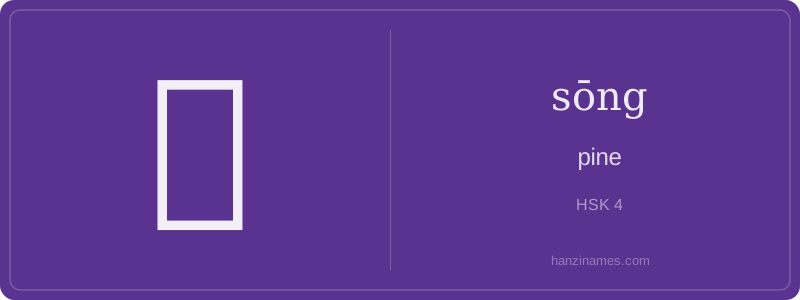
In daily life, 松 appears ubiquitously: on herbal medicine labels (e.g., 松子 sōngzǐ — pine nuts), in place names like Songjiang District (Shanghai), and in idioms like 松柏之志 (sōngbǎi zhī zhì), meaning 'the unwavering resolve of pine and cypress'. Historically, pine resin was used in ink production and traditional lacquerware, and Tang-dynasty texts like the *Bencao Gangmu* document its medicinal use. The character appears in over 300 classical poems, including Du Fu’s 'Pine Wind Pavilion'.
The written form is not a pictograph but a phono-semantic compound: 木 (radical, indicating 'tree-related') + 束 (phonetic, approximating sōng in Old Chinese). No oracle bone or bronze inscription evidence exists for 松—the earliest confirmed forms appear in Warring States bamboo slips (~475–221 BCE), already in this structure.
The Chinese character 松 (sōng) evokes the enduring strength and quiet grace of the pine tree—a symbol deeply rooted in Chinese culture. With its 木 (wood/tree) radical on the left and a phonetic component 束 (shù, meaning 'to bind') on the right, it visually anchors the concept of a coniferous evergreen. In classical poetry and ink painting, the pine stands alongside bamboo and plum as one of the 'Three Friends of Winter', admired for thriving in harsh conditions.
While literally meaning 'pine', 松 also carries rich metaphorical weight—signifying resilience, longevity, and moral integrity. Emperors planted pines in imperial gardens; scholars painted them to express steadfast virtue; and today, elderly Chinese still receive pine-themed gifts during birthdays, echoing ancient associations with immortality. Its dual role—as botanic term and cultural emblem—makes it unusually layered for an HSK-4 character.
Interestingly, 松 is also used as a verb meaning 'to loosen' or 'to relax' (e.g., 放松 fàngsōng), a semantic extension from the pine’s flexible yet unbreakable branches. This polysemy reflects how Chinese characters often evolve through poetic analogy rather than strict logic. Learners benefit from seeing both meanings together: the tree’s physical form mirrors the abstract quality of 'ease'—firm at the core, supple in motion.
Example Sentences
Common Compounds
Similar Characters — Don't Mix These Up
Your First Step into Chinese Culture: Get a Chinese Name
Every journey into Chinese begins with a name. Use our free Chinese name generator to create a meaningful, personalized Chinese name that fits you perfectly.
Get My Chinese Name →