污
Character Story & Explanation
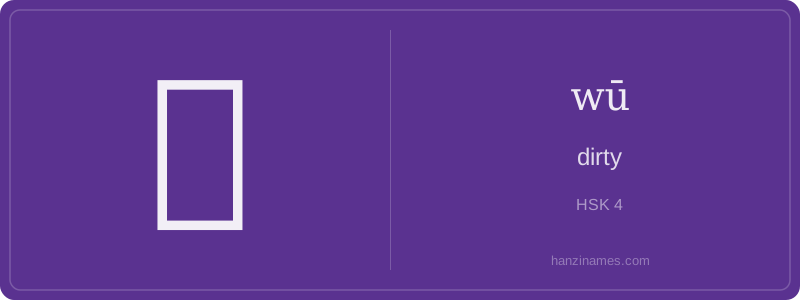
污 is widely used in modern China’s environmental policy and public discourse. Since the 2000s, phrases like 污水 (wūshuǐ, 'sewage') and 工业污染 (gōngyè wūrǎn, 'industrial pollution') appear frequently in government reports and news headlines — reflecting national priorities after rapid industrialization. A well-known idiom is 污人清白 (wū rén qīngbái), meaning 'to smear someone’s good name', still cited in media ethics guidelines.
The character’s earliest attested form appears in Qin dynasty bamboo slips (c. 3rd century BCE) as a compound of 水 (water) and 女. Scholars agree 女 served purely as a phonetic placeholder (both 污 and 女 were pronounced similarly in Old Chinese), not a semantic element — confirming that its core idea has always centered on water-based contamination, not gender.
Hi students! Let’s learn 污 (wū), a Level 4 HSK character meaning 'dirty' or 'to pollute'. It’s built with the water radical (氵) on the left — reminding us that dirt often mixes with water (like muddy puddles or polluted rivers). The right side, 女 (nǚ, 'woman'), is *not* related to gender here; it’s a phonetic component helping with pronunciation. Don’t worry — this is common in Chinese: radicals hint at meaning, and other parts help with sound.
This character appears in many everyday words, especially those about environmental harm or moral corruption — like 污染 (wūrǎn, 'pollution') or 污蔑 (wūmiè, 'to slander'). It carries a strong negative tone, so you’ll rarely see it used lightly. Think of it as a 'red-flag' character: when you spot 污, something is physically unclean, environmentally damaged, or ethically tainted.
Remember: 污 is *not* the same as general 'uncleanliness' — for dust or mess, we use 脏 (zāng). 污 implies contamination — often irreversible, systemic, or intentional. That’s why it’s used in legal terms (e.g., 污点 wūdiǎn, 'stain on one’s record') and ecological discussions. Mastering this nuance helps you sound precise and culturally aware — not just grammatically correct!
Example Sentences
Common Compounds
Similar Characters — Don't Mix These Up
Your First Step into Chinese Culture: Get a Chinese Name
Every journey into Chinese begins with a name. Use our free Chinese name generator to create a meaningful, personalized Chinese name that fits you perfectly.
Get My Chinese Name →