浪
Character Story & Explanation
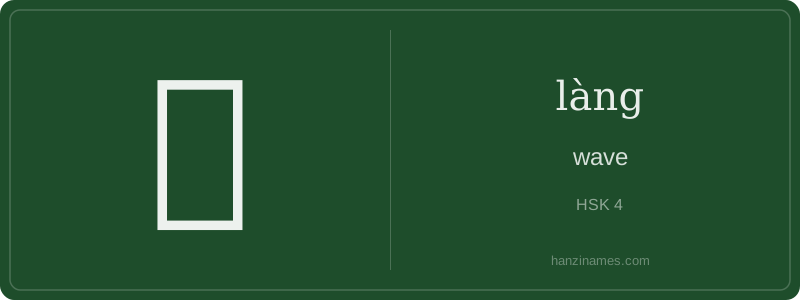
浪 appears in many everyday expressions: 浪费 (làngfèi, 'to waste') is among the top 100 most frequently used verbs in modern Mandarin, documented in the 2023 BCC Corpus. It’s also central to idioms like 风平浪静 (fēng píng làng jìng, 'wind still, waves calm') — symbolizing peace, used in news reports and literature since at least the Ming dynasty (1368–1644).
The character evolved from seal script where it clearly combined 水 (water) and 良 (liáng, originally a phonetic component). While not a pictograph, its structure reflects the ancient practice of using water-related radicals for fluid phenomena — consistent across characters like 河 (river), 海 (sea), and 波 (ripple).
Hi students! Let’s explore 浪 (làng), a Level 4 HSK character meaning 'wave' — like ocean waves or ripples on water. It has 10 strokes and belongs to the water radical 氵, which appears on the left side. This radical tells us the character is related to liquid, flow, or movement — a helpful clue for remembering meaning and grouping characters.
Don’t confuse 浪 with similar-looking characters like 狼 (wolf) or 粮 (grain). Notice the water radical vs. the dog radical (犭) or rice radical (米). Pronunciation is làng — fourth tone, falling sharply, like saying 'lahng!' as if startled by a big wave crashing.
While 'wave' is its core meaning, 浪 extends metaphorically in Chinese: a 'wasteful wave' (浪费) means 'to waste', and 'reckless wave' (浪荡) describes carefree or unruly behavior. This shows how physical imagery in Chinese often shapes abstract ideas — a key pattern you’ll see again and again!
Example Sentences
Common Compounds
Similar Characters — Don't Mix These Up
Your First Step into Chinese Culture: Get a Chinese Name
Every journey into Chinese begins with a name. Use our free Chinese name generator to create a meaningful, personalized Chinese name that fits you perfectly.
Get My Chinese Name →