温
Character Story & Explanation
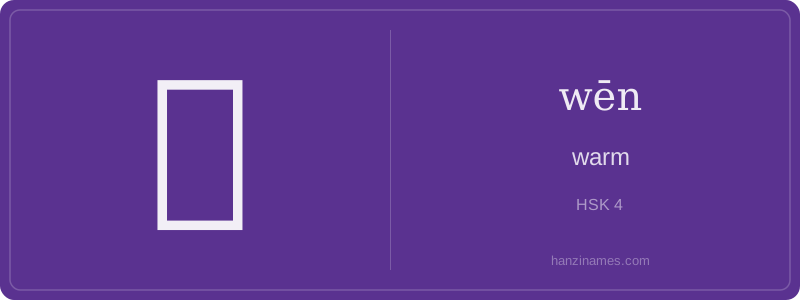
温 is ubiquitous in modern Mandarin: it appears in weather reports (气温, qìwēn, 'temperature'), health advice (温水, wēnshuǐ, 'lukewarm water'), and interpersonal communication (温和, wēnhé, 'gentle/mild'). A documented idiom is 温故知新 (wēn gù zhī xīn)—'review the old to know the new'—from the *Analects* (7.1), emphasizing reflective learning as a warm, renewing process. It's also central to Traditional Chinese Medicine terminology, appearing in over 200 classical herbal formulas classified by thermal nature.
The character evolved from seal script (c. 3rd century BCE), where 氵+昷 represented water-related warmth. 昷 itself combines 日 (sun, heat source) and 囷 (enclosed grain store—symbolizing retained, gentle heat). Unlike speculative oracle-bone origins, this structure is verified in *Shuowen Jiezi* (121 CE), China’s first dictionary, which defines 温 as 'a gentle heat that nurtures life.'
The character 温 (wēn) embodies more than physical warmth—it reflects a core Chinese cultural value: moderation and harmonious balance. In Confucian thought, ‘warmth’ signifies humane, gentle conduct—neither coldly detached nor overly passionate. This ideal appears in phrases like 温良恭俭让 (wēn liáng gōng jiǎn ràng), describing the virtuous person’s composed, benevolent demeanor. Warmth here is ethical temperature: steady, nurturing, socially cohesive.
Water (氵) as its radical signals fluidity and life-sustaining properties—water that is neither scalding nor icy but just right, like the ideal state of human relationships and governance. Ancient medical texts (e.g., *Huangdi Neijing*) classify 温 as one of the four therapeutic natures (寒热温凉), where 温 herbs gently invigorate without overheating the body—mirroring Daoist principles of gentle efficacy and natural resonance.
This worldview rejects extremes: emotional outbursts, political rigidity, or dietary excess are all ‘unbalanced’. 温 thus functions as both sensory descriptor and moral compass—guiding how one speaks (温和 speech), treats elders (温存 care), and even brews tea (温水冲泡). Its quiet presence in daily language reveals a civilization that measures virtue not in intensity, but in sustaining, life-affirming warmth.
Example Sentences
Common Compounds
Similar Characters — Don't Mix These Up
Your First Step into Chinese Culture: Get a Chinese Name
Every journey into Chinese begins with a name. Use our free Chinese name generator to create a meaningful, personalized Chinese name that fits you perfectly.
Get My Chinese Name →