示
Character Story & Explanation
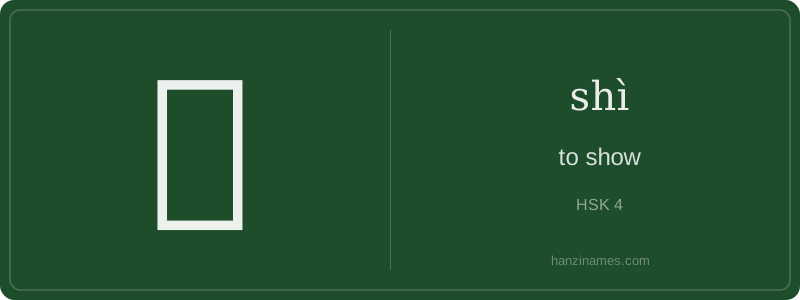
示 is widely used in formal and administrative contexts: in government documents (如:示例、指示), education (示范教学), and digital interfaces (提示信息). It appears in the HSK-4 idiom 指示 (zhǐshì, 'instruction') and the common phrase 表示 (biǎoshì, 'to express/show'). Historically, 示 was a key component in bronze inscriptions denoting ritual announcements to ancestors—documented in Shang-Zhou oracle bone and bronze script corpora.
Archaeologically, 示 originated as a pictograph of an altar or sacrificial platform ( + 二), representing ritual offerings meant to 'show' reverence to spirits. By the Qin dynasty, its form stabilized into the modern five-stroke structure. Today, Chinese people see 示 daily on traffic signs (指示灯), error messages (提示), and classroom posters (示范图)—always signaling directed, meaningful visibility.
The Chinese character 示 (shì) is a foundational semantic component meaning 'to show' or 'to indicate.' Though it appears simple—just five strokes—it carries profound cultural weight as both an independent verb and a radical in hundreds of characters related to ritual, revelation, and communication. Its historical role in ancient inscriptions and classical texts underscores its function as a bridge between human action and divine or authoritative intent.
In modern Mandarin, 示 retains its core sense of making something visible or explicit: from displaying signs in public spaces to demonstrating behavior in education. Unlike English ‘show,’ which often implies performance or entertainment, 示 emphasizes intentionality, clarity, and purposeful communication—whether in signage (指示牌), instruction (示范), or diplomatic statements (表示).
Western equivalents like ‘show,’ ‘indicate,’ ‘display,’ or ‘manifest’ capture parts of 示’s meaning but lack its embedded cultural resonance. In Confucian and bureaucratic traditions, 示 conveys moral or institutional authority—akin to a judge ‘pronouncing’ judgment or a teacher ‘modeling’ virtue. This normative, pedagogical dimension makes 示 more solemn and socially charged than casual English verbs.
Example Sentences
Common Compounds
Similar Characters — Don't Mix These Up
Your First Step into Chinese Culture: Get a Chinese Name
Every journey into Chinese begins with a name. Use our free Chinese name generator to create a meaningful, personalized Chinese name that fits you perfectly.
Get My Chinese Name →