共和国
How to Understand
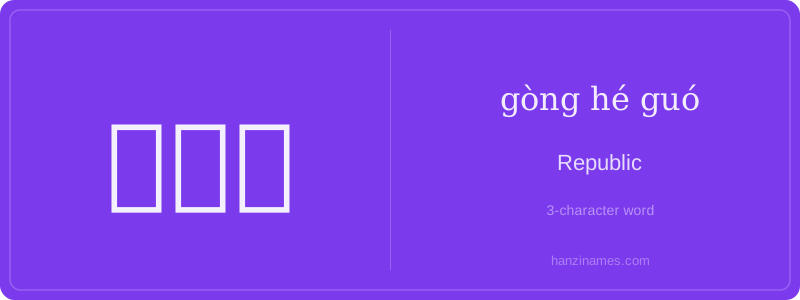
共和国 (gòng hé guó) is the Chinese term for 'republic,' a form of government where power is held by the people and exercised through elected representatives. It differs from a monarchy or dictatorship, emphasizing popular sovereignty and constitutional governance.
The character 共 (gòng) means 'common' or 'shared,' 和 (hé) means 'harmony,' and 国 (guó) means 'country' or 'nation.' Together, they reflect the idea of a nation governed in harmony by its people, rather than by a single ruler or elite group.
Republics are common in modern politics, with countries like the United States, France, and Germany being notable examples. In China, the official name is 中华人民共和国 (Zhōnghuá Rénmín Gònghéguó), meaning 'People's Republic of China.' Understanding this term helps grasp the political structure of many nations.