小孩子
How to Understand
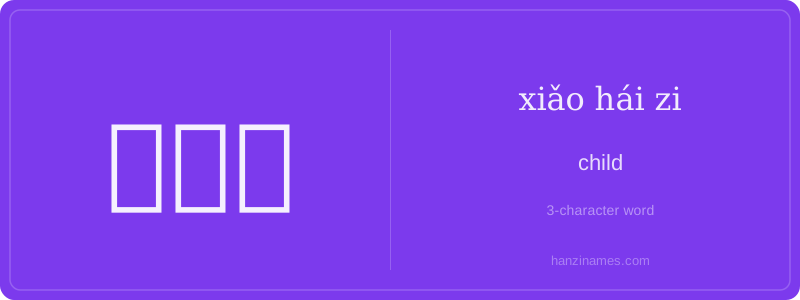
小孩子 (xiǎo hái zi) is a common Chinese term for 'child' or 'children,' typically referring to young people who are not yet adults. It is more informal and affectionate than the more neutral term 儿童 (ér tóng), which is often used in official or formal contexts.
The word is composed of three characters: 小 (xiǎo) meaning 'small,' 孩 (hái) meaning 'child,' and 子 (zǐ), a suffix often used to denote a person, especially a child or son. Together, they create a warm and endearing expression for children.
In daily conversation, 小孩子 is frequently used by parents, teachers, or caregivers when speaking about children. It can also be used humorously or sarcastically, depending on context. The term carries a sense of innocence and youthfulness, making it widely used in both casual and familial settings.