成吉思汗
How to Understand
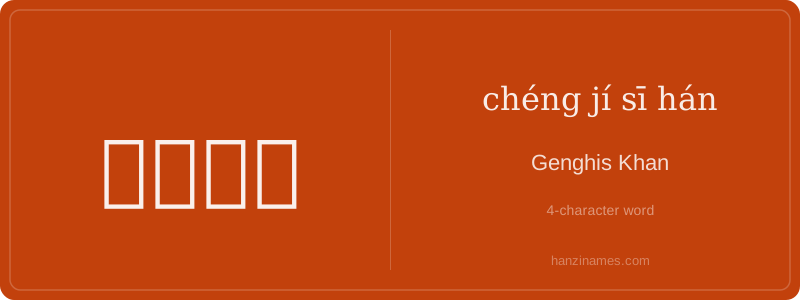
成吉思汗 (Chéngjísīhán) is the Chinese name for Genghis Khan, the founder of the Mongol Empire and one of history's most influential military leaders. It is a proper noun referring specifically to Temüjin, who unified the Mongol tribes and established the largest contiguous empire in history.
The name 成吉思汗 is a transliteration of the Mongolian title 'Chinggis Khaan,' meaning 'universal ruler.' Each character contributes to this title: 成 (chénɡ) means 'achieving' or 'success,' 吉 (jí) means 'auspicious,' 思 (sī) means 'thought' or 'mind,' and 汗 (hàn) means 'khan' or 'ruler.' Together, they reflect the honor and grandeur associated with his leadership.
Today, 成吉思汗 is widely recognized in both historical and cultural contexts. It is often used in discussions about Mongol history, empire-building, and leadership. In modern Chinese media and education, it is commonly referenced to highlight the significance of Mongol contributions to world history.