脱身
How to Understand
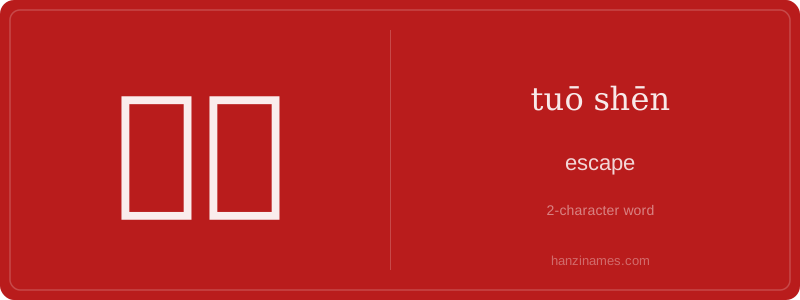
脱身 refers to the act of escaping or freeing oneself from a difficult situation, often involving physical or metaphorical escape. It is commonly used in contexts where someone is trying to get out of a dangerous, uncomfortable, or compromising position.
The character 脱 (tuō) means 'to remove' or 'to escape,' while 身 (shēn) means 'body' or 'self.' Together, they imply the action of freeing one's body or self from a situation. This term has roots in classical Chinese and is often used in both literal and figurative contexts.
脱身 is frequently used in everyday language, especially in stories or situations involving danger, deception, or complex social interactions. It can also be part of idiomatic expressions like 脱身而出 (to escape suddenly), which highlights the urgency or suddenness of the escape.