感冒
How to Understand
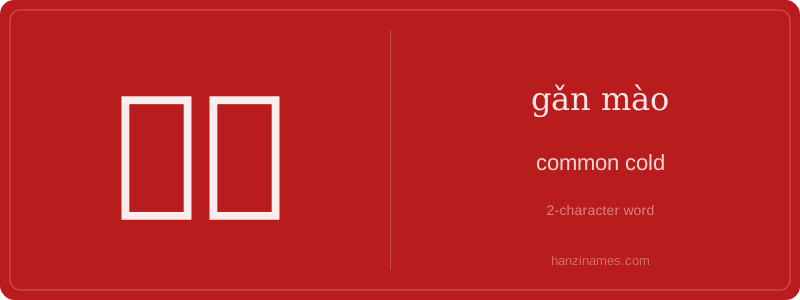
感冒 (gǎn mào) refers to a common cold, an infectious illness of the upper respiratory tract. It is distinct from more severe illnesses like influenza and is often used in everyday conversation to describe mild symptoms such as a runny nose or cough.
The character 感 (gǎn) means 'to feel' or 'to be affected,' while 冒 (mào) means 'to rise' or 'to appear.' Together, they suggest something that 'rises' or 'appears' due to being affected by external factors, such as a virus or cold weather.
感冒 is commonly used in daily life, especially during seasonal changes when colds are more prevalent. It is also used in medical contexts and is often accompanied by phrases like “喝点热水” (hē diǎn lěngshuǐ, 'drink some warm water') for relief. In traditional Chinese medicine, it is believed that catching a cold can be linked to imbalances in the body's energy.