侵犯
How to Understand
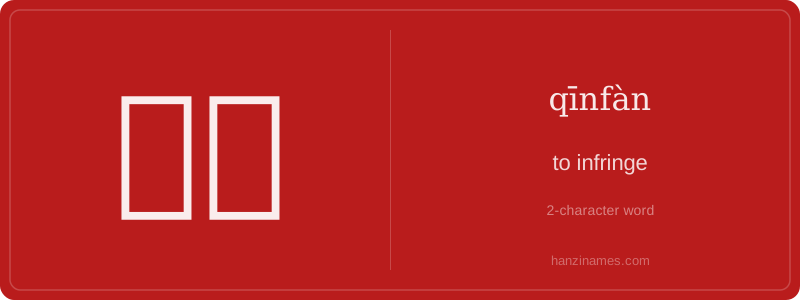
侵犯 means 'to infringe' or 'to violate,' typically referring to the violation of rights, privacy, or territory. It often implies a deliberate act that crosses established boundaries or laws, distinguishing it from more general terms like 'violate' or 'break.'
The character 侵 (qīn) originally meant 'to invade' or 'to encroach,' while 犯 (fàn) means 'to commit an offense' or 'to break a rule.' Together, they form a compound verb emphasizing the intentional nature of the infringement.
侵犯 is commonly used in legal, political, and social contexts. For example, it might describe a country violating another's territorial waters or a company breaching personal data privacy. Understanding this term helps learners grasp how Chinese addresses issues of rights and boundaries in both formal and everyday language.