停泊
How to Say
👀 0
How to Write
Meaning: to moor
How to Understand
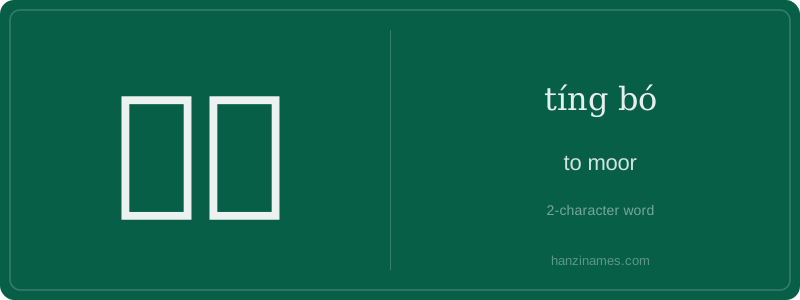
停泊
停泊 refers to the action of a ship or vessel coming to rest in a harbor, dock, or other designated area. It specifically means to anchor or secure a boat, often for safety or to wait for permission to proceed.
The character 停 (tíng) means 'to stop' or 'to halt,' while 泊 (bó) means 'mooring' or 'berthing.' Together, they form a compound that literally means 'to stop and moor,' emphasizing both the act of halting and securing a vessel.
停泊 is commonly used in maritime contexts and is essential for sailors, port workers, and travelers. In China, it is frequently seen in descriptions of ships arriving at ports, such as in Shanghai or Hong Kong. The term can also be used metaphorically, though this is less common.
Example Sentences
那艘船在港口停泊了整整一天。
The ship was anchored in the port for an entire day.
渔船在岸边停泊,准备第二天出海。
Fishing boats are moored on the shore, preparing to go out to sea the next day.