更好
How to Say
👀 0
How to Write
Meaning: Better
How to Understand
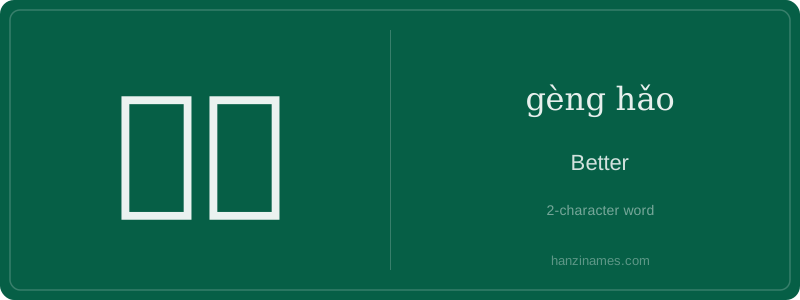
更好
更好 (gèng hǎo) means 'better' in English. It is the comparative form of 好 (hǎo), meaning 'good.' 更 (gèng) functions as a degree marker, similar to 'more' in English, and together they form the comparative form of the adjective 好.
The character 更 (gèng) originally meant 'again' or 'even more,' and it has evolved to function as a comparative particle. 好 (hǎo) means 'good,' 'well,' or 'nice.' Together, 更好 emphasizes an improvement or enhancement over something else.
更好 is commonly used in daily conversations to compare two things, such as choices, situations, or conditions. For example, when choosing between two options, one might say this is 更好 (better). It's also used in contexts like health, performance, or quality to indicate improvement.
Example Sentences
这个方法更好,我们可以试试。
This method is better, we can try it.
你的英语说得比以前更好了。
Your English speaks much better than before.