不耐烦
How to Understand
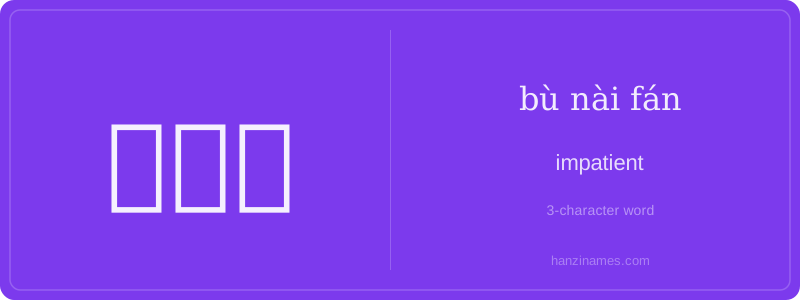
不耐烦 means 'impatient' or 'restless'. It describes someone who lacks patience, often feeling frustrated or anxious when things do not happen quickly enough.
The character 不 (bù) means 'not', 耐 (nài) means 'to endure' or 'to tolerate', and 烦 (fán) means 'trouble' or 'annoyance'. Together, the phrase literally means 'not able to endure trouble', highlighting a state of impatience or irritation.
不耐烦 is commonly used in daily conversations to describe someone who is easily frustrated, such as when waiting in line or when someone is slow to respond. It can also imply a lack of tolerance for delays or inefficiency. In Chinese culture, patience is highly valued, so being impatient may be seen as a negative trait, especially in professional or social settings.