租
Character Story & Explanation
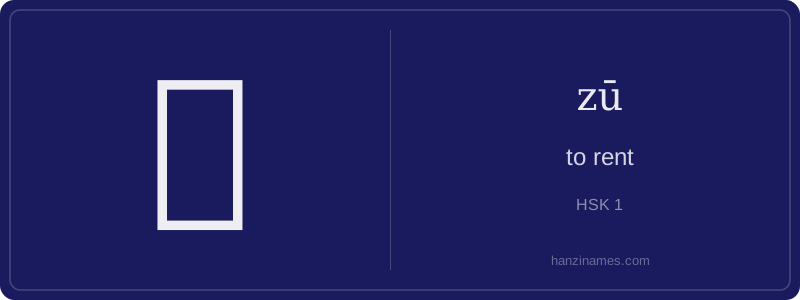
租 is widely used in contemporary China — from online platforms like Ziroom (自如) and Lianjia (链家) to official documents such as the Regulations on Public Rental Housing (公共租赁住房管理办法), enacted nationwide in 2012. Common phrases include 租房 (zū fáng, 'to rent a house') and 出租 (chū zū, 'to lease out'), both appearing frequently in real estate ads and legal notices. The term appears in the 2020 Civil Code (Article 703), which defines lease contracts — confirming its formal, everyday legal relevance.
The character 租 first appeared in seal script during the Warring States period (475–221 BCE) and combines the radical 禾 (hé, 'grain' or 'cereal') with 且 (qiě, originally a phonetic component). Though 禾 suggests agricultural roots, 租 evolved early to mean 'tribute' or 'tax paid in grain' — later broadening to 'payment for use'. Its modern meaning stabilized during the Ming and Qing dynasties, when land leasing became widespread among tenant farmers.
The Chinese character 租 (zū) means 'to hire' or 'to rent' — most commonly used for temporary use of property, vehicles, or services in exchange for payment. Unlike English, where 'hire' often implies employing a person (e.g., hire a lawyer), 租 focuses almost exclusively on leasing tangible assets. This reflects China’s long-standing emphasis on land and resource usage rights rather than ownership — a distinction deeply rooted in historical land tenure systems and reinforced by modern urban housing markets.
In daily usage, 租 carries neutral-to-practical connotations — it’s neither inherently positive nor negative, but transactional and contractual. You’ll see it on rental listings, app interfaces (like Zuber or 58同城), and official documents. Unlike Western leasing that may involve long-term contracts with buyout options, 租 typically signals short- to medium-term, flexible arrangements — aligning with China’s highly mobile urban population and rapid housing turnover.
Culturally, 租 resonates with Confucian-influenced pragmatism: value is placed on functional access over possession. This contrasts with Western ideals like the ‘American Dream’ of homeownership — in China, renting an apartment in Beijing or Shanghai is socially normal, even for professionals in their 30s–40s. Government policies also reinforce 租 as legitimate: since 2017, China has actively promoted ‘rental housing reforms’, building thousands of public rental units — making 租 not just linguistic, but socio-politically salient.
Example Sentences
Common Compounds
Similar Characters — Don't Mix These Up
Your First Step into Chinese Culture: Get a Chinese Name
Every journey into Chinese begins with a name. Use our free Chinese name generator to create a meaningful, personalized Chinese name that fits you perfectly.
Get My Chinese Name →