谢
Character Story & Explanation
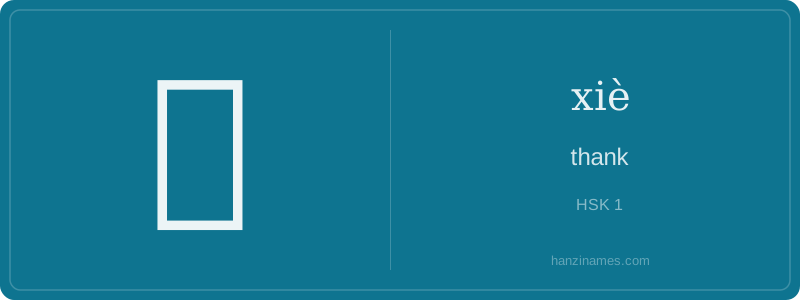
谢 is ubiquitous in modern Chinese life: used in spoken phrases like ‘谢谢’ (xiè xie), written on gift cards, and embedded in formal expressions like ‘感谢您的支持’ (‘We thank your support’) in business emails. It appears in the HSK-1 vocabulary list and is among the first characters learners master. Common idioms include ‘谢天谢地’ (xiè tiān xiè dì, ‘thank heaven and earth’), expressing profound relief—a phrase documented since Ming dynasty vernacular literature.
The character evolved from seal script, where its right side ‘射’ (shè, ‘to shoot’) served phonetically, while the left ‘讠’ (speech radical) indicated semantic connection to language. No pictographic origin exists—it’s a phono-semantic compound, standardized during the Qin dynasty’s script unification. Today, Chinese people use it instinctively when receiving help, gifts, or hospitality—often accompanied by a slight bow or hand gesture, reinforcing its embodied cultural role.
The character 谢 (xiè) embodies a core Confucian virtue: reciprocity through gratitude. In Chinese worldview, thanks are not merely polite expressions but relational obligations—acknowledging debt, hierarchy, and mutual care. Saying ‘xiè’ affirms social harmony; it’s less about individual emotion and more about maintaining balance in relationships, whether with elders, teachers, or benefactors.
Unlike English ‘thank you’, which often functions as a standalone social lubricant, 谢 carries weight—it implies responsibility to reciprocate, even symbolically. This reflects the broader cultural emphasis on *bào* (reciprocal obligation) and *lǐ* (ritual propriety). A sincere 谢 is thus an ethical act, anchoring interpersonal ethics in daily speech.
Moreover, 谢 appears in formal and ritual contexts far beyond casual thanks—such as funerary inscriptions (谢世, ‘to depart this world’) or classical poetry—revealing how gratitude and humility intertwine with mortality and reverence. Its presence in both joyous and solemn settings shows how Chinese thought links appreciation with awareness of impermanence and indebtedness to others.
Example Sentences
Common Compounds
Similar Characters — Don't Mix These Up
Your First Step into Chinese Culture: Get a Chinese Name
Every journey into Chinese begins with a name. Use our free Chinese name generator to create a meaningful, personalized Chinese name that fits you perfectly.
Get My Chinese Name →