快
Character Story & Explanation
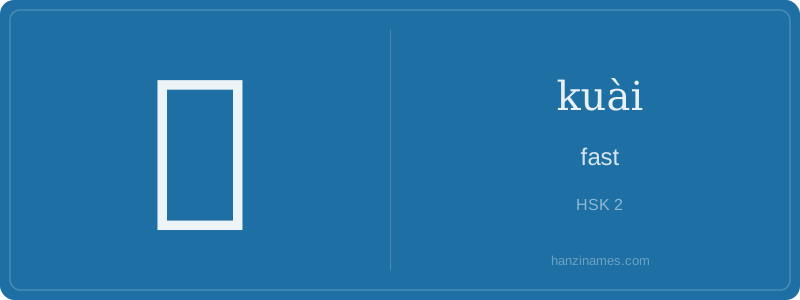
快 is ubiquitous in modern Chinese: it appears in daily expressions like 快点 (kuài diǎn, 'hurry up!'), traffic signs (快速通道, 'express lane'), and digital life (快充, 'fast charging'). A well-documented idiom is 眼疾手快 (yǎn jí shǒu kuài, 'sharp eyes and quick hands'), dating back to Ming-Qing vernacular literature, describing agile reflexes. It’s also central in the compound 快乐 (kuàilè, 'happiness'), recorded in texts as early as the Han dynasty, where 快 conveyed mental ease arising from unimpeded action.
The character’s form is not pictographic but phono-semantic: the left 忄 clearly marks it as emotion-related, while the right 夬 (guài) is a phonetic component derived from ancient graphs meaning 'to decide suddenly'. No oracle bone form survives for 快 itself — it first appears in seal script (c. 3rd century BCE) as a standardized compound, reflecting its conceptual origin in decisive, rapid action rather than visual depiction.
Hello students! Today we’re learning 快 (kuài), a very common and useful character at HSK Level 2. It means 'rapid', 'fast', or 'quick' — but it’s also used to express happiness, as in 'happy' or 'glad'. That dual meaning might surprise you! In fact, 快 originally emphasized speed, and over time, its emotional sense evolved from the idea of 'things happening swiftly and smoothly', leading to a feeling of ease and joy. This semantic expansion is quite typical in Chinese.
Visually, 快 has 7 strokes and belongs to the 忄 (heart/mind) radical — telling us it relates to inner states, not just physical speed. The right side, 夬 (guài), gives the sound and also carries connotations of decisiveness and swiftness. So the character beautifully merges sound, meaning, and psychological nuance. Don’t be confused by its two main senses — context always makes it clear whether someone is moving fast or feeling happy!
As a beginner, practice writing 快 carefully: start with the three-dot heart radical (忄), then write 夬 — which breaks down into 丨 (vertical stroke), 丿 (left-falling stroke), and the ‘knife’ component (刂) at the bottom. Remember: stroke order matters for legibility and muscle memory! Use flashcards with both meanings and real-life examples — like 快跑 (kuài pǎo, 'run quickly') and 我很高兴 (wǒ hěn gāoxìng, but note: 快乐 kuàilè means 'happiness').
Example Sentences
Common Compounds
Similar Characters — Don't Mix These Up
Your First Step into Chinese Culture: Get a Chinese Name
Every journey into Chinese begins with a name. Use our free Chinese name generator to create a meaningful, personalized Chinese name that fits you perfectly.
Get My Chinese Name →