叔
Character Story & Explanation
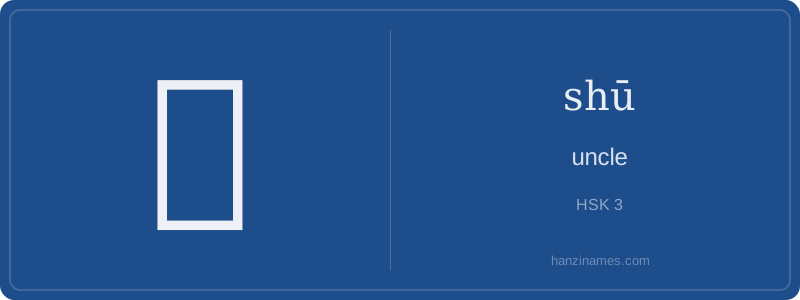
In modern Mandarin, 叔 is widely used as a respectful title for older male acquaintances — e.g., taxi drivers, shopkeepers, or parents’ friends — especially by children and young adults. It’s culturally embedded: calling someone 叔 conveys warmth and deference without formality. Common phrases include 叔叔好 (Shūshu hǎo, 'Hello, Uncle!') and 谢谢叔叔 (Xièxie shūshu, 'Thank you, Uncle!'). It also appears in idioms like 叔侄相认 (shūzhí xiāngrèn, 'uncle and nephew reunite'), highlighting familial bonds in literature and film.
The character 叔 first appeared in bronze inscriptions of the Western Zhou dynasty (c. 1046–771 BCE), where it combined 又 (a hand/‘again’ component, here serving phonetically) and 专门表音的 ‘尗’ (shū, an ancient variant). Its form stabilized by the Qin dynasty. Though not pictographic, its structure reflects early phonosemantic design — common in Chinese script evolution.
Hi students! Let’s learn 叔 (shū), a common and friendly character meaning 'uncle' — specifically your father’s younger brother. It’s an HSK Level 3 word, so it appears early in structured learning. The character is simple: only 8 strokes, and its radical 又 (yòu) — meaning 'again' or 'also' — appears in many action-related characters, though here it’s mainly phonetic and structural. Don’t worry about memorizing radicals yet; just notice how 叔 looks balanced and compact.
This character reflects Chinese kinship precision: unlike English ‘uncle’, which covers many relatives, 叔 strictly refers to *father’s younger brother*. Older brothers are 伯 (bó), and father’s sisters are 姑 (gū). Using the right term shows respect and cultural awareness — essential for real conversations with families or elders.
Pronunciation is straightforward: shū (first tone, high and flat). Practice saying it like ‘shoo’ in ‘shoe’, but with steady pitch — no rise or fall. Try pairing it with names: 张叔 (Zhāng shū) = ‘Uncle Zhang’. This pattern is super common in daily speech, especially when addressing family friends or neighbors respectfully. You’ll hear it often in dramas, chats, and even service settings!
Example Sentences
Common Compounds
Similar Characters — Don't Mix These Up
Your First Step into Chinese Culture: Get a Chinese Name
Every journey into Chinese begins with a name. Use our free Chinese name generator to create a meaningful, personalized Chinese name that fits you perfectly.
Get My Chinese Name →