现
Character Story & Explanation
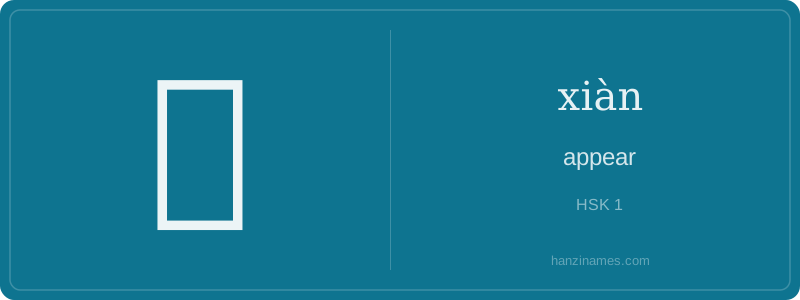
现 is ubiquitous in contemporary Mandarin: it appears in HSK 1 vocabulary like 现在 (xiàn zài, 'now'), 现代 (xiàn dài, 'modern era'), and 兑现 (duì xiàn, 'to honor a commitment'). Historically, 现 first appeared in clerical script (Lishu) during the Han dynasty (206 BCE–220 CE), evolving from the older character 見 (jiàn, 'to see') with the addition of 王 as a phonetic-semantic component. It was standardized in the Kangxi Dictionary (1716) under Radical 96 (王).
The character’s form does not derive from oracle bone inscriptions but emerged later as a variant of 見. Its modern usage is grounded in daily life: cashiers say ‘请现金支付’ (qǐng xiàn jīn zhī fù, 'please pay in cash'), teachers write 现象 (xiàn xiàng, 'phenomenon') on blackboards, and news headlines declare ‘现状严峻’ (xiàn zhuàng yán jùn, 'the current situation is serious') — always pointing to what is empirically observable and socially relevant.
The character 现 (xiàn) opens a window into the Chinese philosophical emphasis on immediacy and tangible presence. Unlike Western abstractions that often separate 'essence' from 'appearance', 现 bridges perception and reality — what *appears* is, in context, what *is present*, what *exists now*. This reflects Confucian and Daoist sensibilities: truth is not merely logical but manifest — seen, heard, or experienced in the here-and-now.
Its radical 王 (wáng, 'king') signals authority and centrality — suggesting that the 'present moment' holds sovereign status in human experience. In classical thought, time isn’t linear but cyclical and relational; 现 anchors consciousness in the decisive, actionable now — the only moment where virtue (de), ritual (li), or response (ying) can meaningfully occur.
This worldview shapes modern usage: 'current affairs' (时事) is often paired with 现, as in 现实 (reality) or 现状 (current situation). There’s no metaphysical veil — reality is what manifests before us. To 'make something appear' (显现) is not illusion but revelation; to 'cash out' (兑现) is to turn promise into tangible fact. Thus, 现 embodies a pragmatic idealism: truth must be visible, verifiable, and timely.
Example Sentences
Common Compounds
Similar Characters — Don't Mix These Up
Your First Step into Chinese Culture: Get a Chinese Name
Every journey into Chinese begins with a name. Use our free Chinese name generator to create a meaningful, personalized Chinese name that fits you perfectly.
Get My Chinese Name →