舒
Character Story & Explanation
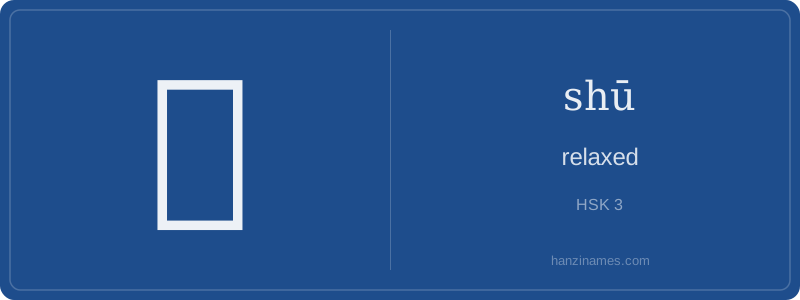
舒 is widely used in contemporary Chinese for comfort-related concepts — especially in compound words like 舒服 (shūfu, ‘comfortable’) and 舒缓 (shūhuǎn, ‘to ease/slow down’). It appears in public health campaigns (e.g., ‘舒缓压力’ — ‘relieve stress’), spa branding, and even subway announcements advising passengers to ‘请舒展身体’ (‘please stretch your body’) during long rides. A well-documented idiom is 舒筋活血 (shū jīn huó xuè), a Traditional Chinese Medicine term meaning ‘to relax tendons and invigorate blood circulation’, still used in clinical and wellness settings today.
The character’s form dates to the Han dynasty clerical script. While not a pictograph, its structure reflects semantic-phonetic composition: 舍 (shě) serves as the phonetic component, and 舌 (shé) — though not directly related to meaning — was likely chosen for historical sound or graphic balance. No oracle bone or bronze inscriptions contain 舒; it emerged later as a specialized character for ‘ease’.
Hi students! Let’s learn 舒 (shū), a Level 3 HSK character with 12 strokes and the ‘tongue’ radical (舌). Don’t be misled — though it contains 舌, this character isn’t about speech! It originally conveyed the idea of physical ease: stretching out comfortably, like relaxing after work. In modern usage, it almost always describes a deep, calm sense of comfort — not just physical stretching, but mental and emotional relief.
Notice how 舒 is structured: left side is 舍 (shě, ‘to abandon’ or ‘hut’), right side is 舌 (shé, ‘tongue’). Historically, this combination suggested ‘a place where the tongue rests’ — metaphorically, a state of ease where even internal tension (symbolized by the tongue, linked to speech and emotion) lets go. It’s a beautiful example of how Chinese characters encode psychological states through concrete imagery.
As you practice writing 舒, remember its stroke order matters — especially the balanced flow between the left ‘hut’ component and the right ‘tongue’. Writing it slowly helps reinforce its meaning: each stroke is like gently unfolding your body and mind. This character appears often in wellness contexts, travel ads, and daily expressions like 舒服 — so mastering it opens doors to natural, heartfelt communication in Chinese.
Example Sentences
Common Compounds
Similar Characters — Don't Mix These Up
Your First Step into Chinese Culture: Get a Chinese Name
Every journey into Chinese begins with a name. Use our free Chinese name generator to create a meaningful, personalized Chinese name that fits you perfectly.
Get My Chinese Name →