交
Character Story & Explanation
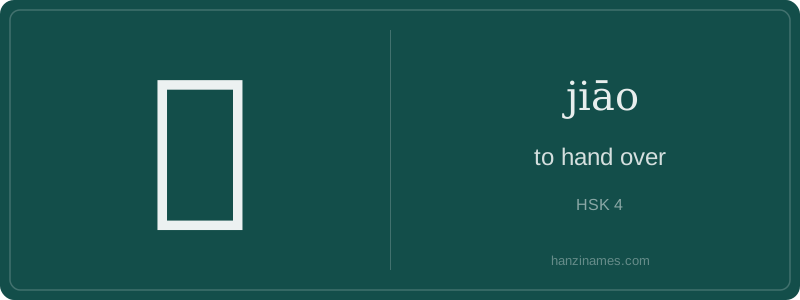
交 is ubiquitous in daily Chinese life: students 交作业 (jiāo zuòyè) 'submit assignments', citizens 交税 (jiāo shuì) 'pay taxes', and travelers 交身份证 (jiāo shēnfènzhèng) 'hand over ID' at checkpoints. It appears in the HSK-4 idiom 交口称赞 (jiāo kǒu chēng zàn)—literally 'exchange mouths to praise'—meaning unanimous acclaim, highlighting how 交 extends metaphorically to collective, reciprocal endorsement.
Archaeologically, 交 first appears in bronze inscriptions (c. 11th–3rd century BCE) as a pictograph of crossed legs ( + 丿), symbolizing intersection or mutual contact—not a literal 'crossing' but dynamic interaction. Later seal script standardized its form; the top radical 亠 ('lid') signifies coverage or formality, reinforcing its use in regulated exchanges.
The Chinese character 交 (jiāo) embodies the concept of reciprocal exchange—whether material, relational, or procedural. Unlike English verbs like 'give' or 'pay', which often imply one-way transfer, 交 emphasizes mutual involvement: handing over *and* receiving, delivering *and* accepting. This reflects Confucian values of reciprocity (shù 恕) and balanced social obligation, where action is incomplete without acknowledgment or return.
In modern usage, 交 carries bureaucratic precision: it denotes formal, documented transfers—tuition fees, tax payments, ID documents—where accountability matters. Western equivalents like 'submit' or 'file' capture procedure but lack 交’s embedded sense of relational responsibility. Even in digital contexts (e.g., 交作业 'submit homework'), the character implies a student-teacher covenant, not just data transmission.
Culturally, 交 contrasts with Western transactional logic by embedding ethics into action. While 'paying rent' in English centers on legal compliance, 交房租 subtly frames it as fulfilling a shared understanding—not merely discharging debt, but maintaining harmony through timely, respectful exchange. This makes 交 a linguistic anchor for China’s emphasis on guānxi (relationship networks) and social trust as operational infrastructure.
Example Sentences
Common Compounds
Similar Characters — Don't Mix These Up
Your First Step into Chinese Culture: Get a Chinese Name
Every journey into Chinese begins with a name. Use our free Chinese name generator to create a meaningful, personalized Chinese name that fits you perfectly.
Get My Chinese Name →