知识产权
How to Understand
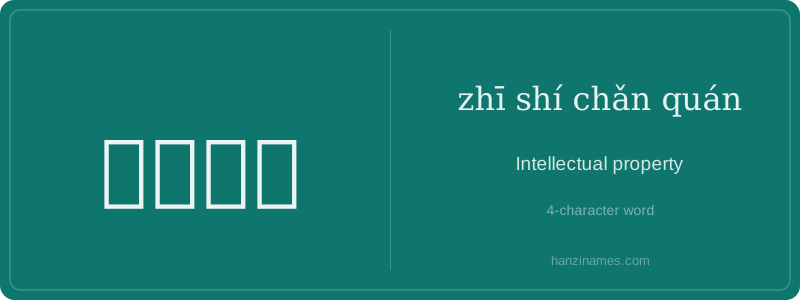
知识产权 refers to the legal rights granted to individuals or organizations for their creations, such as inventions, literary and artistic works, symbols, names, and images used in commerce. It is a broad term that includes patents, copyrights, trademarks, and trade secrets. Unlike physical property, intellectual property is intangible and protected by law to encourage innovation and creativity.
The character 知 (zhī) means 'to know' or 'knowledge,' 识 (shí) means 'awareness' or 'recognition,' 产 (chǎn) means 'production' or 'creation,' and 权 (quán) means 'right' or 'power.' Together, they convey the idea of rights over created knowledge or intellectual output.
Intellectual property plays a crucial role in modern economies, especially in technology and entertainment industries. In China, protecting intellectual property has become increasingly important as the country transitions from manufacturing to innovation-driven growth. Understanding this term is essential for anyone involved in business, research, or creative fields in China.